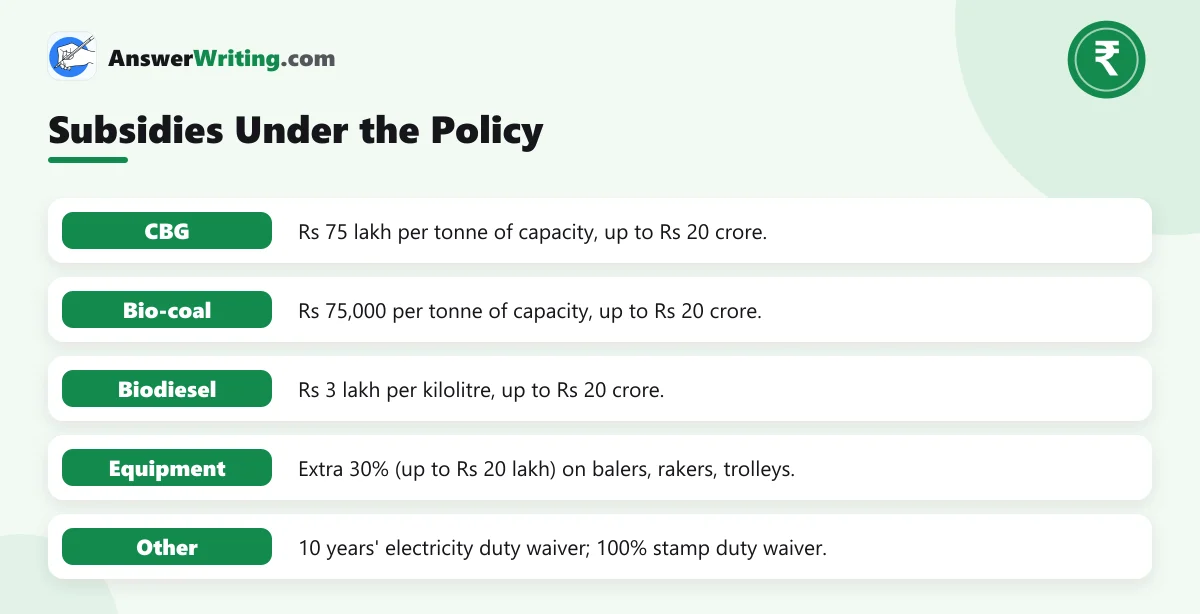
The Uttar Pradesh State Bio-Energy Policy 2022 encourages private companies to make energy from waste: compressed biogas (CBG or Bio-CNG), bio-coal, biodiesel and bio-ethanol, using crop residue (parali), cow dung, city waste, mandi waste and sugar mill waste. It gives production-linked subsidies, such as Rs 75 lakh per tonne of CBG capacity up to Rs 20 crore, with UPNEDA as the nodal agency, and runs for five years from its notification.
UP PCS GS 6 asked about biomass energy in 2025, describing it as renewable and ecologically sensitive in Uttar Pradesh. This post explains the policy from its official text and gives you a structure for such questions.
Why Biomass Energy Matters in UP
The policy’s own preface gives the reasons:
- Stubble burning: burning crop waste in fields pollutes the air and lowers soil fertility. Bio-energy plants turn this waste into fuel.
- Farmers’ income: selling crop waste gives farmers extra income.
- Rural jobs: collection, transport and plants create work in villages.
- Waste management: city waste, cow dung and sugar mill press mud can be used instead of dumped.
UP has large amounts of all these wastes because it is a big producer of crops like wheat, rice and sugarcane, and has a large livestock population.
The Policy at a Glance
| Point | What the policy says |
|---|---|
| Name | Uttar Pradesh State Bio-Energy Policy 2022 |
| Valid for | Five years from notification; registered units get benefits for the project’s life |
| Replaces | The Bio-Energy Policy 2014 and the Bio-Energy Enterprise Promotion Programme 2018 |
| Products | Compressed biogas (Bio-CNG), bio-coal, biodiesel, bio-ethanol |
| Nodal agency | UPNEDA |
| Plan | One bio-energy plant (CBG, bio-pellet or biodiesel) in each tehsil |
How Waste Will Reach the Plants
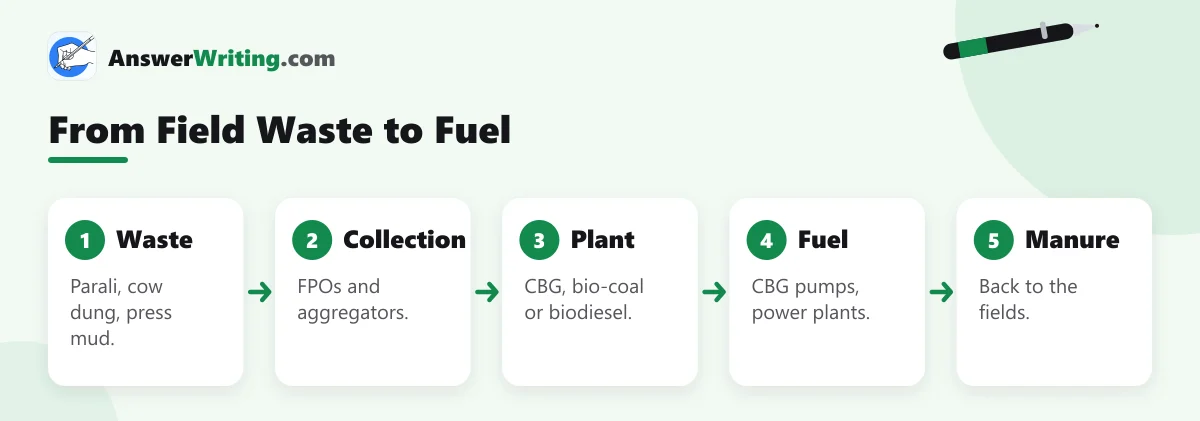
- Farmer Producer Companies: the Agriculture Department will help form at least one FPO in each block to collect crop waste.
- District committee: headed by the District Magistrate, to make crop waste available to plants at market price.
- Sugar mills: CBG plants can be set up in cooperative sugar mills, using press mud.
- Gaushalas: cow dung from state animal shelters will be supplied to CBG plants under the Centre’s SATAT scheme.
- Mandis: long-term contracts for market waste.
- Bio-manure: the slurry left after making CBG is recognised as fermented organic manure and will be sold at licensed fertiliser shops.
Why “Ecologically Sensitive”?
The 2025 question called biomass energy both renewable and ecologically sensitive. A good answer explains both sides:
- Renewable: crops grow back every season, and waste is produced every day.
- Sensitive: removing all crop residue can hurt soil; growing energy crops can compete with food crops for land and water; and badly run plants can cause smell, water pollution or methane leaks.
The policy tries to manage this by using waste first and growing non-food crops like karanj, neem, castor and jatropha only on barren land.
A Sample 125-Word Answer
Question (GS 6, 2025, adapted): Biomass energy is considered renewable and ecologically sensitive in Uttar Pradesh. Discuss.
Answer: Biomass energy is energy from organic material such as crop residue, cow dung and city waste. UP, with large farm and livestock waste, has high potential.
Renewable: waste is produced every season; plants under the UP Bio-Energy Policy 2022 turn it into compressed biogas, bio-coal and biodiesel, with subsidies of up to Rs 20 crore per unit.
Benefits: it reduces stubble burning, adds to farmers’ income and creates rural jobs; bio-manure returns to fields.
Sensitive: removing too much residue can weaken soil; energy crops can compete with food for land and water; poorly run plants can pollute.
Way forward: use waste before crops, plant energy crops only on barren land, and monitor plants through UPNEDA.
Key Takeaways
- The UP State Bio-Energy Policy 2022 promotes CBG, bio-coal, biodiesel and bio-ethanol from waste.
- UPNEDA is the nodal agency; the policy runs for five years.
- Subsidies: Rs 75 lakh per tonne of CBG and Rs 75,000 per tonne of bio-coal capacity, up to Rs 20 crore each.
- It plans one bio-energy plant per tehsil and uses FPOs, gaushalas, sugar mills and mandis for waste supply.
- In answers, show both the benefits and the ecological risks of biomass.
Practise This Question
Write this question in your own words and get it evaluated on AnswerWriting’s UP PCS page, in Hindi or English, with a model answer. Your first three evaluations are free.
Related Reading
FAQs
What is the UP Bio-Energy Policy 2022?
A state policy that gives incentives for making compressed biogas, bio-coal, biodiesel and bio-ethanol from waste in Uttar Pradesh.
Which agency runs the UP Bio-Energy Policy?
UPNEDA, the Uttar Pradesh New and Renewable Energy Development Agency.
What subsidy does the policy give for CBG?
Rs 75 lakh per tonne of production capacity, up to a maximum of Rs 20 crore.
How long is the policy valid?
Five years from its notification.
Why is biomass energy important for UP?
It reduces stubble burning, uses farm and animal waste, adds to farmers’ income and creates rural jobs.