AnswerWritingAnswerWriting
    PricingJoin Telegram
    Get AppNew
    Scan or click to download
    QR code to download Answer Writing on Google Play
    Get it on Google Play
    QR code to download Answer Writing on the App Store
    Download on the App Store
    Micro-listed to the official UPSC syllabus

    Super 50 Psychology Optional
    Test Series 2027

    50 tests covering the full Paper I and Paper II syllabus. Every answer evaluated in about 60 seconds, with a model answer.

    Q. Critically evaluate the multistore model of memory.Paper I · 15 marks · 250 words
    Atkinson and Shiffrin: three stores, sensory,✓Clear structure
    short term and long term memory.
    STM holds about 7 ± 2 items for 18 to 30 s.✓
    Rehearsal moves information into LTM.
    Critique: too linear and rehearsal based.✓
    Baddeley and Hitch split STM into parts.Name components
    Craik and Lockhart: depth of processing.Add evidence
    9/15Evaluated

    Test 10 of 50

    Paper I

    7 Memory I: Stores and Processing

    Topic · 1 hour

    Test calendar

    MTWTFSS✓2✓4567

    Next: Test 11 on Friday

    Model answer

    Repeat mistake

    Weak conclusion, seen in 3 tests

    50Total tests
    100%Syllabus covered
    6Full length tests
    60 secPer answer
    Enroll NowTry FREE Evaluation

    Included in ProJoin anytimeTest 1 free to viewModel answer every time

    Valid for these exams

    UPSCCivil Services Exam · Psychology Paper I and II

    Same paper pattern in every exam listed.

    Why Super 50 works

    Built for one thing: writing better Mains answers, test after test.

    50 tests, full syllabus

    Every topic in the official syllabus, mapped test by test.

    Topic, sectional, full length

    Start small, then build up to the real 3 hour paper.

    Fast evaluation

    About 60 seconds for an answer, and about 30 minutes for a full 3 hour paper.

    Model answer every time

    See what a full-marks answer looks like for each question.

    Ask about your evaluation

    Not sure why you lost marks? Ask, and get a clear reply.

    Remembers your mistakes

    Repeat mistakes are flagged across tests so you fix them for good.

    Test plan

    The full syllabus in 50 tests

    24 Paper I and 16 Paper II topic tests, 4 sectional tests and 6 full length papers.

    Test1
    TopicFree sample1 hour

    1 Introduction to Psychology

    • 1. Introduction : Definition of Psychology; Historical antecedents of Psychology and trends in the 21st century; Psychology and scientific methods; Psychology in relation to other social sciences and natural sciences; Application of Psychology to societal problems.
    Test2
    Topic1 hour

    2 Methods of Psychology

    • 2. Methods of Psychology : Types of research : Descriptive, evaluative, diagnostic and prognostic; Methods of Research : Survey, observation, case-study and experiments; Characteristics of experimental design and non-experimental designs; quasi-experimental designs; Focussed group discussions, brain storming, grounded theory approach.
    Test3
    Topic1 hour

    3 Research Methods I: Steps and Designs

    • 3. Research methods : Major steps in psychological research (problem statement, hypothesis formulation, research design, sampling, tools of data collection, analysis and interpretation and report writing); Fundamental versus applied research; Methods of data collection (interview, observation, questionnaire and case study). Research Designs (Ex-post facto and experimental).
    Test4
    Topic1 hour

    3 Research Methods II: Statistics

    • 3. Research methods : Application of statistical techniques (t-test, two-way ANOVA, correlation and regression and factor analysis) item response theory.
    Test5
    Topic1 hour

    4 Development of Human Behaviour

    • 4. Development of Human Behaviour : Growth and development; Principles of development, Role of genetic and environmental factors in determining human behaviour; Influence of cultural factors in socialization; Life span development—Characteristics, development tasks, promoting psychological well-being across major stages of the life span.
    Test6
    Topic1 hour

    5 Sensation and Attention

    • 5. Sensation, Attention and Perception : Sensation: concepts of threshold, absolute and difference thresholds, signal-detection and vigilance; Factors influencing attention including set and characteristics of stimulus.
    Test7
    Topic1 hour

    5 Perception

    • 5. Sensation, Attention and Perception : Definition and concept of perception, biological factors in perception; Perceptual organization-influence of past experiences, perceptual defence-factor influencing space and depth perception, size estimation and perceptual readiness; The plasticity of perception; Extrasensory perception; Culture and perception, Subliminal perception.
    Test8
    Topic1 hour

    6 Learning I: Theories and Processes

    • 6. Learning : Concepts and theories of learning (Behaviourists, Gestaltist and Information processing models). The processes of extinction, discrimination and generalisation.
    Test9
    Topic1 hour

    6 Learning II: Reinforcement and Modelling

    • 6. Learning : Programmed learning, probability learning, self instructional learning, concepts, types and the schedules of reinforcement, escape, avoidance and punishment, modelling and social learning.
    Test10
    Topic1 hour

    7 Memory I: Stores and Processing

    • 7. Memory : Encoding and remembering; Short-term memory, Long-term memory, Sensory memory, Iconic memory, Echoic memory: The Multistore model, levels of processing.
    Test11
    Topic1 hour

    7 Memory II: Mnemonics and Forgetting

    • 7. Memory : Organization and Mnemonic techniques to improve memory; Theories of forgetting: decay, interference and retrieval failure: Metamemory; Amnesia: Anterograde and retrograde.
    Test12
    Sectional1.5 hours

    Paper I Sectional Test 1

    1 to 7 (all of the above)

    Sections 1 to 7.

    Test13
    Topic1 hour

    8 Thinking I: Cognitive Development

    • 8. Thinking and Problem Solving : Piaget’s theory of cognitive development; Concept formation processes; Information processing.
    Test14
    Topic1 hour

    8 Thinking II: Problem Solving and Creativity

    • 8. Thinking and Problem Solving : Reasoning and problem solving, Facilitating and hindering factors in problem solving, Methods of problem solving: Creative thinking and fostering creativity; Factors influencing decision making and judgement; Recent trends.
    Test15
    Topic1 hour

    9 Motivation and Emotion I

    • 9. Motivation and Emotion : Psychological and physiological basis of motivation and emotion; Measurement of motivation and emotion; Effects of motivation and emotion on behaviour.
    Test16
    Topic1 hour

    9 Motivation and Emotion II

    • 9. Motivation and Emotion : Extrinsic and intrinsic motivation; Factors influencing intrinsic motivation; Emotional competence and the related issues.
    Test17
    Topic1 hour

    10 Intelligence I: Theories

    • 10. Intelligence and Aptitude : Concept of intelligence and aptitude, Nature and theories of intelligence-Spearman, Thurstone, Guilford, Vernon, Sternberg and J.P. Das.
    Test18
    Topic1 hour

    10 Intelligence II: Types and Measurement

    • 10. Intelligence and Aptitude : Emotional Intelligence, Social intelligence, measurement of intelligence and aptitudes, concept of IQ, deviation IQ, constancy of IQ; Measurement of multiple intelligence; Fluid intelligence and crystallized intelligence.
    Test19
    Topic1 hour

    11 Personality I: Theories

    • 11. Personality : Definition and concept of personality; Theories of personality (psychoanalytical, socio-cultural, interpersonal, developmental, humanistic, behaviouristic, trait and type approaches).
    Test20
    Topic1 hour

    11 Personality II: Measurement and Self

    • 11. Personality : Measurement of personality (projective tests, pencil-paper test); The Indian approach to personality; Training for personality development; Latest approaches like big 5 factor theory; The notion of self in different traditions.
    Test21
    Topic1 hour

    12 Attitudes I: Formation and Change

    • 12. Attitudes, Values and Interests : Definitions of attitudes, values and interests; Components of attitudes; Formation and maintenance of attitudes. Measurement of attitudes, values and interests. Theories of attitude changes.
    Test22
    Topic1 hour

    12 Attitudes II: Values, Prejudice, Attribution

    • 12. Attitudes, Values and Interests : strategies for fostering values. Formation of stereotypes and prejudices; Changing others’ behaviour, Theories of attribution; Recent trends.
    Test23
    Topic1 hour

    13 Language and Communication

    • 13. Language and Communication : Human language—Properties, structure and linguistic hierarchy, Language acquisition—predisposition, critical period hypothesis; Theories of Language development—Skinner and Chomsky; Process and types of communication—effective communication training.
    Test24
    Topic1 hour

    14 Contemporary Issues I: Computers and AI

    • 14. Issues and Perspectives in Modern Contemporary Psychology : Computer application in the psychological laboratory and psychological testing; Artificial intelligence; Psychocybernetics.
    Test25
    Topic1 hour

    14 Contemporary Issues II: Consciousness

    • 14. Issues and Perspectives in Modern Contemporary Psychology : Study of consciousness: sleep-wake schedules; dreams, stimulus deprivation, meditation, hypnotic/drug induced states; Extrasensory perception; Intersensory perception; Simulation studies.
    Test26
    Sectional1.5 hours

    Paper I Sectional Test 2

    8 to 14 (all of the above)

    Sections 8 to 14.

    Test27
    Full Length3 hours

    Paper I Full Length Test 1

    Complete Paper I

    Complete Paper I syllabus, UPSC standard paper.

    Test28
    Topic1 hour

    1 Measuring Individual Differences

    • 1. Psychological Measurement of Individual Differences : The nature of individual differences. Characteristics and construction of standardized psychological tests. Types of psychological tests. Use, misuse and limitation of psychological tests. Ethical issues in the use of psychological tests.
    Test29
    Topic1 hour

    2 Well-being and Mental Disorders

    • 2. Psychological well being and Mental Disorders : Concept of health-ill health, positive health, well being, causal factors in Mental disorders (Anxiety disorders, mood disorders; schizophrenia and delusional disorders; personality disorders, substance abuse disorders). Factors influencing positive health, well being; lifestyle and quality of life; Happiness disposition.
    Test30
    Topic1 hour

    3 Therapeutic Approaches

    • 3. Therapeutic Approaches : Psychodynamic therapies. Behaviour therapies. Client centered therapy. Cognitive therapies. Indigenous therapies (Yoga, Meditation). Biofeedback therapy. Prevention and rehabilitation of the mentally ill; Fostering mental health.
    Test31
    Topic1 hour

    4 Work Psychology I: Selection and Motivation

    • 4. Work Psychology and Organisational Behaviour : Personnel selection and training. Use of Psychological tests in the industry. Training and human resource development. Theories of work motivation. Herzberg, Maslow, Adam Equity theory, Porter and Lawler, Vroom; Leadership and participatory management.
    Test32
    Topic1 hour

    4 Work Psychology II: Stress and Leadership

    • 4. Work Psychology and Organisational Behaviour : Advertising and marketing; Stress and its management; Ergonomics; consumer psychology; Managerial effectiveness; Transformational leadership; Sensitivity training; Power and politics in organizations.
    Test33
    Topic1 hour

    5 Psychology in Education

    • 5. Application of Psychology to Educational Field : Psychological principles underlying effective teaching-learning process. Learning styles. Gifted, retarded, learning disabled and their training. Training for improving memory and better academic achievement. Personality development and value education. Educational, vocational guidance and Career counselling. Use of Psychological tests in educational institutions; Effective strategies in guidance programmes.
    Test34
    Topic1 hour

    6 Community Psychology

    • 6. Community Psychology : Definition and concept of Community Psychology. Use of small groups in social action. Arousing Community consciousness and action for handling social problems. Group decision making and leadership for social change. Effective strategies for social change.
    Test35
    Topic1 hour

    7 Rehabilitation Psychology

    • 7. Rehabilitation Psychology : Primary, secondary and tertiary prevention programmes—role of psychologists. Organising of services for rehabilitation of physically, mentally and socially challenged persons including old persons. Rehabilitation of persons suffering from substance abuse, juvenile delinquency, criminal behaviours. Rehabilitation of victims of violence. Rehabilitation of HIV/AIDS victims, the role of social agencies.
    Test36
    Sectional1.5 hours

    Paper II Sectional Test 1

    1 to 7 (all of the above)

    Sections 1 to 7.

    Test37
    Topic1 hour

    8 Disadvantaged Groups

    • 8. Application of Psychology to disadvantaged groups : The concepts of disadvantaged, deprivation social, physical, cultural and economic consequences of disadvantaged and deprived groups. Educating and motivating the disadvantaged towards development; Relative and prolonged deprivation.
    Test38
    Topic1 hour

    9 Social Integration

    • 9. Psychological problem of social integration : The concept of social integration. The problem of caste, class, religion and language conflicts and prejudice. Nature and manifestation of prejudice between the ingroup and outgroup. Causal factors of such conflicts and prejudices. Psychological strategies for handling the conflicts and prejudices. Measures to achieve social integration.
    Test39
    Topic1 hour

    10 IT and Mass Media

    • 10. Application of Psychology in Information Technology and Mass Media : The present scenario of information technology and the mass media boom and the role of psychologists. Selection and training of Psychology professionals to work in the field of IT and mass media. Distance learning through IT and mass media. Entrepreneurship through e-commerce. Multilevel marketing. Impact of TV and fostering value through IT and mass media. Psychological consequences of recent developments in Information Technology.
    Test40
    Topic1 hour

    11 Psychology and Economic Development

    • 11. Psychology and Economic development : Achievement motivation and economic development. Characteristics of entrepreneurial behaviour. Motivating and Training people for entrepreneurship and economic development; Consumer rights and consumer awareness, Government policies for promotion of entrepreneurship among youth including women entrepreneurs.
    Test41
    Topic1 hour

    12 Environment and Population

    • 12. Application of Psychology to environment and related fields : Environmental Psychology effects of noise, pollution and crowding. Population Psychology : Psychological consequence of population explosion and high population density. Motivating for small family norms. Impact of rapid scientific and technological growth on degradation of environment.
    Test42
    Topic1 hour

    13 Military and Sports Psychology

    • 13. Application of psychology in other fields : (a) Military Psychology: Devising psychological tests for defence personnel for use in selection, Training, counseling; training psychologists to work with defence personnel in promoting positive health; Human engineering in defence. (b) Sports Psychology: Psychological interventions in improving performance of athletes and sports. Persons participating in Individual and Team Games.
    Test43
    Topic1 hour

    13 Media and Terrorism

    • 13. Application of psychology in other fields : (c) Media influences on pro and anti-social behaviour. (d) Psychology of Terrorism.
    Test44
    Topic1 hour

    14 Psychology of Gender

    • 14. Psychology of Gender : Issues of discrimination, Management of diversity; Glass ceiling effect, Self-fulfilling prophecy, Women and Indian society.
    Test45
    Sectional1.5 hours

    Paper II Sectional Test 2

    8 to 14 (all of the above)

    Sections 8 to 14.

    Test46
    Full Length3 hours

    Paper II Full Length Test 1

    Complete Paper II

    Complete Paper II syllabus, UPSC standard paper.

    Test47
    Full Length3 hours

    Paper I Full Length Test 2

    Complete Paper I

    Complete Paper I syllabus, UPSC standard paper.

    Test48
    Full Length3 hours

    Paper II Full Length Test 2

    Complete Paper II

    Complete Paper II syllabus, UPSC standard paper.

    Test49
    Full Length3 hours

    Paper I Full Length Test 3

    Complete Paper I

    Complete Paper I syllabus, UPSC standard paper.

    Test50
    Full Length3 hours

    Paper II Full Length Test 3

    Complete Paper II

    Complete Paper II syllabus, UPSC standard paper.

    Enroll NowTry FREE Evaluation

    Psychology Optional pattern

    Exam by exam, so you practise the format you will face.

    UPSC CSE · Paper I

    250 marks · 3 hours

    8 questions in two sections; attempt 5. Questions 1 and 5 are compulsory, at least one more from each section.

    UPSC CSE · Paper II

    250 marks · 3 hours

    Same format as Paper I, on psychology issues and applications.

    How Super 50 works

    Get Pro

    Super 50 is included in your Pro plan.

    Open Super 50

    Find it in your dashboard and start with Test 1.

    Write on paper

    Answer like the real exam, then upload a photo.

    Get evaluated

    Marks, feedback and a model answer, in minutes.

    Beyond the 50 tests

    Daily Answer Writing for Psychology Optional

    Practise every day, not just on test day. Super 50 sits inside AnswerWriting AI, so everything you write can be evaluated.

    Psychology Optional Previous Year Questions (PYQs)

    Real UPSC questions from past papers, sorted by paper and topic. Write and get each one evaluated.

    Daily Answer Writing for Psychology Optional

    A fresh exam-style question every day. Write, upload and get feedback with a model answer.

    Evaluate any question

    Questions from your coaching tests, books or your own practice. Upload the answer and get it marked.

    Your Super 50 tests

    Every test copy evaluated: about 60 seconds an answer, about 30 minutes a full paper.

    Try FREE Evaluation

    Pricing

    Super 50 comes with Pro

    No separate fee. Get Pro and you get Super 50 plus everything else in AnswerWriting AI.

    Super 50 included

    AnswerWriting Pro

    ₹3,499 / year
    Included with Annual Pro only.Enroll NowCompare all Pro plans

    Everything in Pro

    • Super 50 Test Series
    • Unlimited answer and essay evaluations
    • Model answer with every evaluation
    • Multi-answer evaluator, 5 a day
    • Daily Answer Writing
    • Unlimited MCQ practice
    • AI Mentor, 100 messages a day
    • Current Affairs, full access
    • Unlimited GS 4 case study generator
    • Advanced progress insights
    • Priority support
    • 3-day money-back guarantee

    Testimonials

    Why Aspirants Love Us

    Aspirants across UPSC and State PSCs on how evaluation changed their answer writing.

    As someone who has reached the interview stages of the 69th and 70th BPSC as well as the 2024 UPPSC Mains, I am very picky about evaluation. AnswerWriting.com is the first AI tool I’ve seen that actually understands the nuances of state PSC requirements. The structure it suggests is exactly what the boards look for.
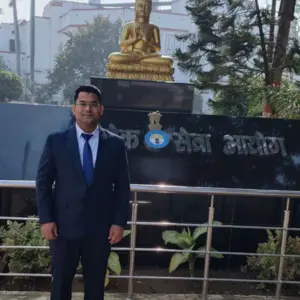
    Rajesh Kumar ChaudharyCleared 71st BPSC Mains 2025 (Interviewee)
    AnswerWriting has completely transformed my UPSC Mains preparation. I used to struggle with structuring my answers, but the AI feedback helped me refine my writing and improve with every attempt. It’s like having a personal mentor available 24/7!

    Navdeep YadavUPSC Aspirant
    The biggest hurdle for Hindi medium students is finding quality evaluation. This platform evaluates my Devanagari answers with the same precision as English. It catches my keyword mistakes and suggests better vocabulary-truly a level playing field now.

    Mitanshi SharmaUP PCS Hindi Medium Aspirant 2028 Mains
    I always found it difficult to get my answers evaluated on time, which slowed down my preparation. AnswerWriting changed that by providing instant, detailed feedback. Now, I can practice more efficiently and see real improvement in my writing.

    Varun SharmaUPSC Aspirant
    I asked for BPSC Evaluator and the team was so responsive. They are actually building features based on what we need. The AI doesn't just give marks; it tells me why I lost 0.5 marks in my introduction. That's the level of detail I need.

    Tanmay G.BPSC Aspirant 2026
    Initially, I was worried about my handwriting and using ruled landscape sheets, but the platform handles it perfectly. The Daily Answer Writing program has turned my preparation from erratic to disciplined. I loved it - the feedback is instant and incredibly user-friendly.

    Rohit Kumar GoyalUPSC Aspirant 2027

    FAQs

    Frequently Asked Questions

    Which plan includes the Psychology Optional Test Series?

    Annual Pro. Optional test series are included only with the Annual plan.

    Is Super 50 a separate purchase?

    No. Super 50 is part of AnswerWriting Pro. Included with Annual Pro only.

    How are the tests evaluated?

    Write on paper, click a photo and upload it. AnswerWriting AI marks each answer to the real marks and word limit, with section-wise feedback and a model answer.

    How long does evaluation take?

    About 60 seconds for a single answer. A full 3 hour paper takes about 30 minutes, because every answer in it is marked in the same detail.

    When can I start?

    Join anytime and start practising from Test 1.

    Can I write in Hindi?

    Yes. You can write your answers in Hindi, and get your feedback in any of 23 languages.

    Do I get a model answer for every question?

    Yes. Every evaluated answer comes with a model answer, so you can see what full marks look like.

    Can I ask questions about my evaluation?

    Yes. Ask AnswerWriting AI why you lost marks on any answer and get a clear reply.

    Can I upload from my phone?

    Yes. Upload from the website or the AnswerWriting app.

    What happens after Mains 2027?

    The test series moves on to the next Mains cycle automatically. Your Pro access continues until your plan ends.

    Is the test plan updated?

    Yes. It follows the official syllabus and is reviewed every year.

    Is there a free sample?

    Yes. Test 1 of every Super 50 series is a free sample paper. You can view it without enrolling. It cannot be downloaded.

    Is there a refund?

    Pro comes with a 3-day money-back guarantee.

    Trusted by 100K+ users

    Write Confidently, Score Higher with AnswerWriting AI

    Refine your UPSC and State PSC Mains answers with clinical precision. AnswerWriting AI checks clarity, relevance and structure, helping you improve with every attempt.

    Enroll NowDownload App
    Avg. Score Boost+23% in 30 days
    Answers Evaluated58000+ this month
    Top Scorer Rate1 in 3 users

    AI Evaluation

    GS Paper II, Q.488%
    Introduction9.2/10
    Content & Analysis8.7/10
    Conclusion8.5/10
    Structure & Flow9/10
    Tip: Cite a recent SC judgement in the introduction to strengthen your opening.
    Enroll Now

    AnswerWriting

    AnswerWriting.com is revolutionizing exam preparation by making answer writing easy and effective. Enhance your skills with AI-powered feedback and achieve your dream scores!

    Quick Links

    • About Us
    • Contact Us
    • Pricing
    • Blogs
    • Anthroholic

    Tools

    • Answer Evaluator
    • Essay Evaluator
    • Optional Evaluator
    • Daily Answer Writing
    • Refer & Earn

    Contact

    info@answerwriting.comChat with us on WhatsApp
    QR code to download Answer Writing on Google Play
    Get the AppGet it on Google PlayDownload on the App Store

    Copyright © Anthroholic Technologies Private Limited. All rights reserved.

    • Privacy Policy|
    • Terms|
    • Cookie Policy|
    • Refund Policy|
    • FAQ