How to Choose Optional Subject for UPSC
Every year, a significant number of UPSC aspirants with strong GS preparation and decent essay scores miss the final list. When they analyse their scorecards, the pattern is almost always the same. Their GS scores are competitive. Their optional scores are not.
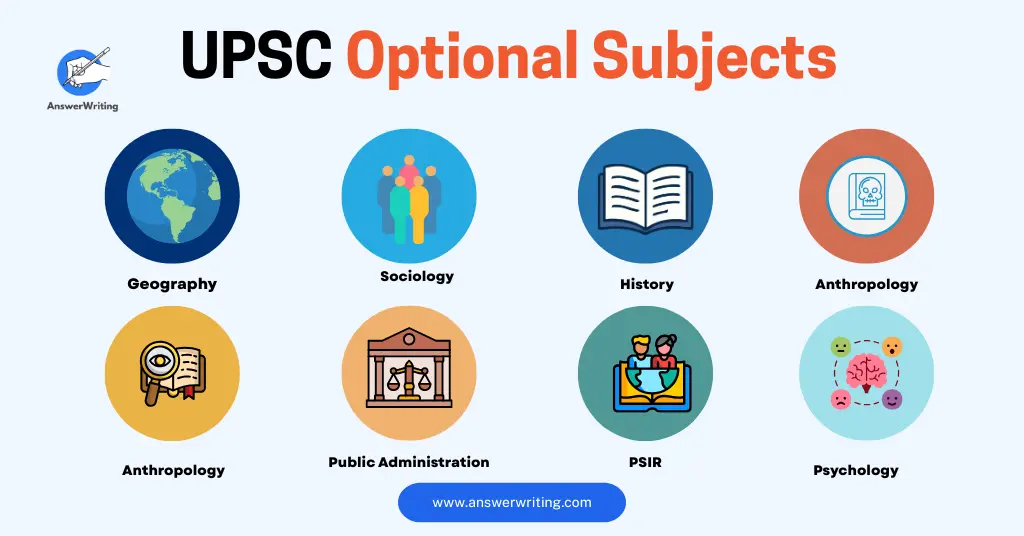
The optional subject is 500 marks out of 1,750. That is 28.5% of your entire Mains score sitting on a single decision you make at the beginning of your preparation. Choose well, and the optional becomes your rank-maker. Choose poorly, and no amount of GS preparation can fully compensate.
Here is the part that should concern every aspirant: most people choose their optional for the wrong reasons. They choose what their coaching centre recommends. They choose what their friend chose. They choose the subject that sounds easiest or the one with the shortest syllabus. And then they spend 12 to 18 months preparing a subject they have no genuine connection with, producing answers that score in the 240 to 270 range when they needed 320 to 350 to make a difference.
This guide gives you a honest, structured framework for making this decision correctly.
Why This One Decision Can Make or Break Your UPSC Rank
To understand why optional selection matters so much, look at what the numbers actually say.
In a typical UPSC final list, the difference between Rank 1 and Rank 100 is rarely more than 100 to 120 marks across the entire Mains and interview combined. Within that difference, optional scores routinely account for 60 to 80 marks of variation. A candidate who scores 360 in their optional versus one who scores 280 has an 80-mark head start that GS performance alone almost never overcomes.
The reason optional scores vary so dramatically is not intelligence or hard work. It is fit. A candidate who has genuine background in a subject, who reads it with interest, and who writes answers that satisfy a subject-matter expert examiner will consistently outscore a candidate who prepared the same subject mechanically without that foundation.
The optional is also the one paper where you have complete control over the playing field. You choose the subject. You decide the depth. You own the preparation. That makes it the highest-leverage decision in your entire UPSC journey.
The Factors That Actually Matter When Choosing an Optional
Genuine Interest and Academic Background
This is the most important factor and the most frequently underweighted one.
Optional preparation is a 12 to 18 month sustained engagement with a subject at a level of depth that demands genuine intellectual investment. If you find the subject interesting, that investment feels productive. You read beyond the syllabus. You engage with ideas rather than memorising them. Your answers have a quality of genuine understanding that examiners recognise and reward.
If you have no interest in the subject, preparation becomes a grind. You memorise without understanding. Your answers are technically correct but intellectually flat. The examiner, who is a subject expert, notices this.
Academic background matters for a similar reason. A candidate with a degree in Geography has already built the foundational conceptual framework of the subject. They know the terminology, the thinkers, the debates. They are building upward from a solid base. A candidate with no Geography background is building from scratch, which is entirely possible but requires significantly more time and effort to reach the same depth.
The honest question to ask yourself: when you read about this subject outside of UPSC preparation, does it interest you? If the answer is yes, that is a strong signal. If the answer is no, reconsider regardless of what the scoring trends say.
Scoring Potential and Historical Trends
Not all optionals score equally. Some subjects have historically produced higher average scores among serious aspirants. This is partly because of examiner culture, partly because of the nature of the subject (more objective subjects allow for clearer right and wrong answers), and partly because of the quality of available study material.
Subjects with strong scoring histories include Anthropology, Geography, Sociology, Public Administration, and some literature papers (particularly for aspirants with strong language backgrounds). Subjects like Mathematics and Physics can produce very high scores for candidates with strong technical backgrounds, but the variance is high: the ceiling is very high and the floor is very low.
Scoring trends are worth studying but should not be the primary driver of your decision. A subject you are genuinely prepared in will always outscore a subject you chose purely for its scoring trend but prepared mechanically.
Look at UPSC toppers’ optional score data over the last five years. This is publicly available from the UPSC website and from various aspirant communities. Identify the range of scores (not just the highest) for subjects you are considering. The range tells you more than the peak.
Overlap with GS Syllabus
Several optional subjects share significant content with GS papers. This overlap is a genuine advantage because it means your optional preparation reinforces your GS preparation and vice versa. The same time investment produces double dividends.
The major overlaps are:
Geography optional overlaps heavily with GS1 (Indian and World Geography) and partially with GS3 (environment and disaster management).
Public Administration optional overlaps substantially with GS2 (governance, polity, and social justice) and GS4 (ethics in administration).
Sociology optional overlaps with GS1 (Indian society) and GS2 (social justice themes).
History optional overlaps with GS1 (Indian heritage, culture, and history).
Economics optional overlaps with GS3 (Indian economy, economic development, and planning).
Political Science and International Relations optional overlaps with GS2 (international relations) and GS2 (Indian polity).
For an aspirant choosing between two equally interesting subjects, the one with more GS overlap is the more efficient choice. But do not choose a subject you dislike purely because of GS overlap. The optional preparation burden is too heavy to carry without genuine interest.
Availability of Study Material and Guidance
This factor is practical but critical. For any optional you choose, you need access to standard textbooks, previous year question papers with model answers, and ideally a mentor, teacher, or evaluator who knows the subject well.
Popular optionals like Geography, Sociology, History, Anthropology, and Public Administration have abundant study material, numerous coaching options, large online communities, and extensive previous year answer archives. Preparing these subjects is logistically straightforward.
Less popular optionals may have limited study material, fewer teachers who specialise in the subject for UPSC, and smaller aspirant communities for peer learning. This does not make them bad choices, but it does mean the preparation burden is higher.
Before finalising your optional, verify: are there good standard textbooks for the UPSC syllabus? Are previous year papers available with model answers? Is there a teacher or evaluator who can assess your answers? If the answer to any of these is no, factor that into your decision.
Length and Depth of the Syllabus
Some optional syllabi are compact and deep. Others are long and broad. Both have implications for preparation strategy and time investment.
A compact syllabus (like Anthropology or Philosophy) allows you to achieve comprehensive coverage more quickly but demands very high depth within each topic. A broad syllabus (like History or Geography) requires more total preparation time but may allow you to identify and focus on high-frequency areas.
Read the full syllabus of any optional you are seriously considering. Map it against your existing knowledge and estimate honestly: how long will it take to prepare this syllabus to the depth that an optional examiner expects? That estimate should factor into your decision, especially if you are on a tight preparation timeline.
The Factors That Are Overrated and Mislead Aspirants
Several factors that aspirants commonly use to choose their optional are far less important than they appear.
“This optional has a short syllabus.” Syllabus length is a minor consideration. What matters is the depth required, the availability of material, and your fit with the subject. A short syllabus that you have no interest in will produce worse results than a longer syllabus you genuinely engage with.
“My friend scored well in this optional.” Your friend’s success with a subject reflects their background, interest, and preparation quality, not the inherent scoring potential of the subject for you. What worked for them may not work for you, and vice versa.
“This optional is recommended by my coaching centre.” Coaching centres recommend subjects they teach. This is a conflict of interest. Their recommendation reflects their faculty strength and business model, not your individual profile. Take coaching centre recommendations as one data point, not as a decision.
“This optional is scoring this year.” Optional scoring trends shift. A subject that produced high scores three years ago may not produce the same results today if the examiner pool has changed or if the question pattern has evolved. Short-term trend chasing is a poor basis for an 18-month commitment.
“This optional has no negative marking.” All UPSC Mains papers have no negative marking. This is not a differentiating factor among optionals.
“This optional will impress the interview board.” The interview board is interested in the depth of your knowledge about your optional, not its prestige. A candidate who has deeply prepared Maithili literature and can speak about it with genuine insight will impress more than one who chose Public Administration for its perceived administrative relevance but prepared it superficially.
An Honest Overview of Popular Optional Subjects
| Optional Subject | Key Strength | Honest Challenge | GS Overlap | Best For |
|---|---|---|---|---|
| Geography | Strong scoring history, rich visual content (maps, diagrams), wide GS overlap | Broad syllabus, physical geography demands scientific precision | High (GS1, GS3) | Science or arts graduates with spatial thinking ability |
| Sociology | Compact syllabus, conceptually accessible, strong GS1 and GS2 overlap | Requires genuine theoretical depth, not just common sense | High (GS1, GS2) | Humanities graduates, aspirants interested in social issues |
| Anthropology | Compact syllabus, relatively objective content, strong scoring trend | Limited standard material, niche subject needs dedicated guidance | Moderate (GS1) | Aspirants with science or social science background |
| Public Administration | Direct administrative relevance, strong GS2 overlap, abundant material | Increasingly competitive, requires updated policy knowledge | High (GS2, GS4) | Aspirants with governance interest, management graduates |
| History | Rich intellectual tradition, large material base, strong GS1 overlap | Very long syllabus, historiographical depth required | High (GS1) | History graduates, aspirants with strong reading habits |
| Political Science and IR | Strong GS2 overlap, conceptually engaging, good scoring potential | Broad syllabus, requires current affairs integration | High (GS2) | Political science graduates, aspirants interested in IR |
| Economics | High ceiling for strong economics backgrounds, strong GS3 overlap | Technical and mathematical content, high variance in scores | High (GS3) | Economics graduates, aspirants comfortable with data |
| Philosophy | Compact syllabus, develops analytical rigour, unique intellectual depth | Requires genuine philosophical engagement, limited coaching options | Moderate (GS4) | Aspirants with humanities background and analytical disposition |
| Literature papers | Potential home ground advantage for language specialists | Requires deep language and literary knowledge, examiner subjectivity | Low | Aspirants with strong language and literature background |
| Mathematics | Very high ceiling for strong candidates, objective marking | Very high floor risk, unforgiving for those without strong base | Low | Engineering or mathematics graduates with strong fundamentals |
How to Test Your Optional Before Committing
Choosing an optional is a major decision but it does not have to be a blind one. Before committing 18 months to a subject, run it through this five-step test.
- Read the full syllabus carefully. Not a summary. The actual UPSC syllabus document. Does it excite you or exhaust you? Your gut reaction to the full syllabus is genuine data.
- Read one standard textbook chapter from the subject. Pick a topic from the middle of the syllabus, not an introductory chapter. Read it carefully. Do you find it engaging? Do you want to read more? Or does it feel like an obligation?
- Attempt one previous year question without preparation. Pick a question from a past optional paper and write a 15-minute answer. Then look at a model answer. How far were you from the expected depth and framework? This gap assessment tells you how much work the subject requires for you specifically.
- Talk to someone who prepared this optional seriously. Not someone who chose it, but someone who prepared it to an advanced level. Ask them honestly: what was the hardest part? What surprised them about the examiner’s expectations? What would they do differently?
- Spend two weeks doing preliminary reading on two shortlisted subjects simultaneously. After two weeks, which one are you more drawn to? Which one do you think about when you are not studying? That pull is meaningful.
This five-step test takes three to four weeks. It is the best investment of time you can make before committing to a subject that will define 18 months of your preparation and 500 marks of your score.
What to Do If Your Current Optional Is Not Working
Some aspirants reach their second or third attempt with an optional that is consistently underperforming. Scores below 260 to 270 despite serious preparation are a genuine warning signal. The question of whether to continue or switch is one of the most difficult in UPSC preparation.
Consider switching your optional if all three of the following are true. Your score has not improved meaningfully across attempts despite genuine preparation effort. You have received evaluated feedback indicating that your answers lack the subject-specific depth the examiner expects. And you have identified an alternative subject where your interest and background are significantly stronger.
Do not switch your optional if your score is underperforming because of answer writing quality rather than subject knowledge. A subject you understand but cannot express effectively in the exam format is a writing problem, not an optional problem. Changing the subject will not fix a writing problem.
If you do decide to switch, make the decision early in your next preparation cycle. A half-prepared new optional is worse than a well-prepared familiar one. Give the new subject at least 12 full months of dedicated preparation before the next attempt.
Common Mistakes Aspirants Make While Choosing
| Common Mistake | Why It Hurts | The Fix |
|---|---|---|
| Choosing based on peer or coaching recommendation alone | Others’ success with a subject reflects their profile, not yours. | Run the five-step test yourself. Make an evidence-based personal decision. |
| Choosing the shortest syllabus without checking depth requirements | Short syllabi often demand very high depth per topic. Less content does not mean less work. | Read the full syllabus and a standard textbook chapter before deciding. |
| Choosing based on one year’s scoring trend | Trends shift. An optional that scored well last year may not next year. | Look at five-year score ranges, not single-year peaks. |
| Not checking availability of study material before deciding | Discovering mid-preparation that quality material is scarce creates serious problems. | Verify material availability before committing. Make a resource list first. |
| Choosing an optional with no GS overlap when overlap was available | Misses double-dividend preparation efficiency. | Among equally suitable optionals, prefer the one with stronger GS overlap. |
| Switching optional too late in the preparation cycle | A half-prepared new optional is worse than a familiar weak one. | If switching, decide by the end of the first month of a new preparation cycle. |
| Treating optional choice as irreversible | This creates paralysis and prevents rational reassessment between attempts. | Reassess honestly after each attempt. Switching is allowed and sometimes necessary. |
FAQs on Choosing an Optional Subject for UPSC
1. Can a science graduate choose a humanities optional and do well?
Absolutely. Optional selection is about interest, preparation quality, and fit, not about matching your degree to the subject. Many engineering graduates have scored exceptionally in Sociology, Anthropology, and Philosophy. The key is giving yourself enough time to build the conceptual foundation if you are coming from a different academic background. Expect to invest three to four extra months in foundational reading compared to someone with a humanities background.
2. Is it better to choose an optional with a small aspirant community or a large one?
Both have trade-offs. A large aspirant community (like Geography or Sociology) means abundant resources, peer learning opportunities, and coaching options. But it also means more competition and potentially more standardised answers that examiners see frequently. A smaller community may have fewer resources but also less competition and more opportunity to stand out with original, well-prepared answers. Choose based on your resource access and preparation style, not community size alone.
3. How much does the optional examiner’s subjectivity affect scores?
It varies by subject. More objective subjects (Mathematics, Economics with quantitative components, some science subjects) have less examiner subjectivity because answers can be more clearly right or wrong. More interpretive subjects (Literature, Philosophy, Sociology) have more examiner subjectivity. This is not necessarily a disadvantage: a well-written, intellectually engaging answer in a subjective subject can score very highly. But it does mean that in these subjects, writing quality and depth of engagement matter even more.
4. Should I choose an optional that aligns with my cadre preference or service preference?
Not necessarily. Your optional is tested in Mains and briefly in the interview. Your cadre or service performance depends on your overall rank and preferences, not on your optional subject. Do not choose an optional based on which service you want to join. Choose it based on where you can score the most marks. A higher rank gets you more service and cadre options than an optional chosen for its perceived administrative alignment.
5. How do I know if I have prepared my optional to the right depth?
The most reliable indicator is evaluated answer quality. If an expert evaluator in your subject consistently rates your answers at 15 to 18 out of 20 on practice questions, your depth is competitive. If your scores cluster below 12 to 13 despite multiple revisions, there is a depth problem. Platforms like AnswerWriting.com that provide subject-specific optional answer evaluation can give you this honest assessment without waiting for an actual exam result.
6. Is it possible to prepare two optionals simultaneously and decide later?
Technically yes, but practically inadvisable for most aspirants. Running two serious optional preparations simultaneously halves the depth you achieve in each. The better approach is to use the five-step testing method to make a firm decision within four weeks and then commit fully. If you are genuinely torn between two subjects after the testing process, choose the one with stronger GS overlap as the tiebreaker.
Final Thought
The optional subject decision deserves more careful thought than most aspirants give it. It is not a form-filling exercise. It is a strategic commitment that will shape 18 months of your preparation and 500 marks of your score.
Choose based on genuine interest and honest self-assessment. Verify your choice with the five-step test before committing. Prepare with depth rather than coverage. Get your answers evaluated regularly by someone who understands the subject at the examiner’s level.
And remember: the right optional, chosen for the right reasons and prepared with genuine intellectual engagement, is not just a scoring strategy. It is a subject you will know well enough to speak about confidently in your interview, to draw on in your GS answers, and to carry into your career as a civil servant.
That is the kind of optional preparation that produces both a high score and a well-rounded officer.
Choose wisely. Prepare deeply. Write precisely.