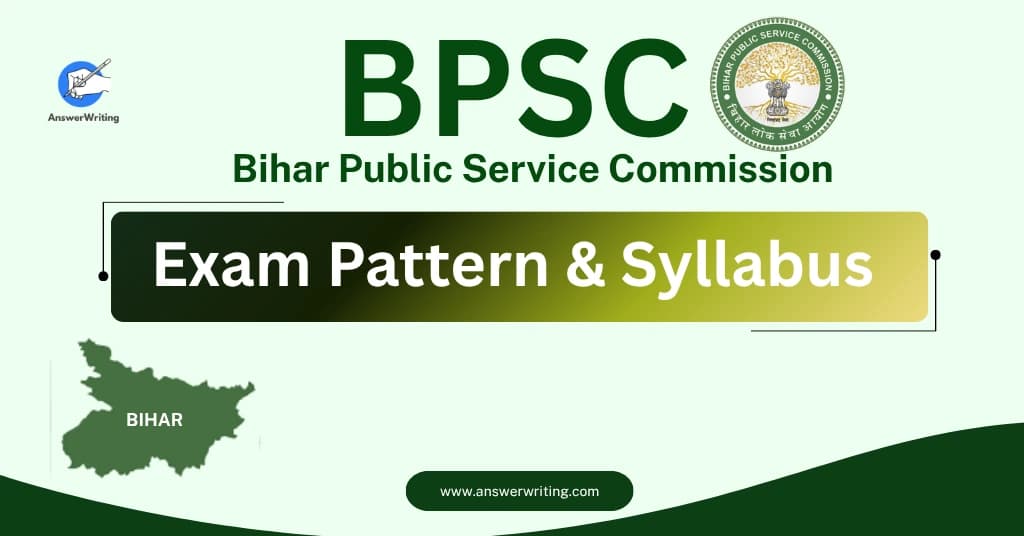
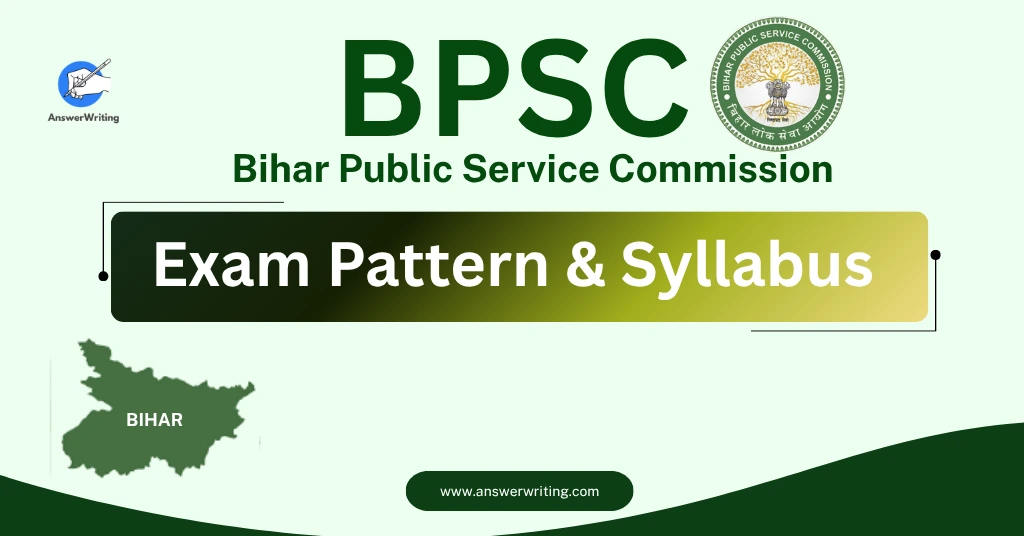
The Bihar Public Service Commission (BPSC) conducts the Integrated Combined Competitive Examination (CCE), widely known as the BPSC CCE, for the purpose of recruiting eligible candidates into various Group A and Group B services within the Bihar state administration.
Some of the key posts recruited through the BPSC CCE include Deputy Superintendent of Police (DSP), District Commander, Prison and Correctional Services Inspector, Block Development Officer (BDO), Revenue Officer (RO), Assistant Director, Supply Inspector, Labour Enforcement Officer, and District Planning Officer, among others.
It is important to note that these examinations are not conducted on an annual basis. They are typically held at intervals of one to two years, depending on the number of vacancies notified by the Commission at any given time.
The following section provides a detailed and structured overview of the BPSC Exam Pattern and the overall Selection Process.
Exam Process
| Stage of Exam | Type of Exam | Duration | Total Marks |
| Prelims | Objective | 2 Hours | 150 Marks |
| Mains | Descriptive / Objective Optional Paper (Qualifying) | 3 Hours for Descriptive Paper and 2 Hours for Optional Paper | 1000 Marks |
| Interview | Personality Test | Not Defined | 120 Marks |
Process of Preliminary Examination
The Preliminary Examination serves as the first and initial screening stage of the BPSC selection process. The following points outline the key procedural aspects of this stage:
Release of Notification: The process begins with the BPSC releasing an official notification regarding the examination, following which the online application form-filling process commences.
Timeline: After the completion of the application process, the Preliminary Examination is usually conducted approximately three to four months later.
Examination Conduct: The Preliminary Examination is held in a single shift on the same day across various examination centers located throughout the state, as determined and designated by the Commission.
Language Provisions: The question paper is made available in two languages, namely Hindi and English. In the event of any discrepancy or dispute regarding the language of a particular question, preference and precedence will be given to the version printed in English.
Qualifying Nature: The Preliminary Examination is purely qualifying in nature. This means that the marks obtained at this stage are not carried forward or added to the marks secured in the Main Examination or the Interview.
Recent Changes: A significant recent change has been introduced whereby, on the basis of the Preliminary Examination results, the number of candidates shortlisted for the Main Examination will be ten times the total number of notified vacancies. This is a departure from the earlier practice, under which approximately 10 percent of the total number of candidates who appeared in the Preliminary Examination were selected for the Main stage.
The key details of the Preliminary Examination are summarized in the table below:
| Aspect | Details |
| Nature of Examination | Objective type; candidates are required to select the correct option from four provided choices |
| Question Paper and Marks | One General Studies paper (objective type); total of 150 questions carrying a maximum of 150 marks; duration of 2 hours |
| Passing Criteria | Candidates are generally required to score between 60 and 70 percent marks to qualify (this may vary depending on the difficulty level of the examination) |
| Marking Scheme | Each correct answer earns 1 mark; a penalty of 1/3 mark is imposed for each incorrect answer; marking multiple answers for a single question is treated as an incorrect response |
Mains Examination Process
Candidates who successfully clear the Preliminary Examination become eligible to appear for the Main Examination, which is conducted in Patna at various centers designated by the BPSC. The Main Examination carries a total of 900 marks, excluding the qualifying General Hindi paper and the qualifying Optional paper.
Structure of the Main Examination
The Main Examination consists of both compulsory and optional components, as outlined below:
Compulsory Papers:
- General Hindi (Qualifying)
- General Studies Paper I
- General Studies Paper II
- Essay Paper
Optional Paper: Candidates are required to select one optional subject from the list of subjects provided by the Commission. The standard of the optional subject paper is set at a level equivalent to the three-year honors examination level of Patna University. The optional paper is MCQ-based and qualifying in nature. Once an optional subject has been selected, the choice is considered final and cannot be changed under any circumstances.
BPSC Mains Examination
| Subject | Nature | Marks | Duration | Remarks |
| General Hindi | Descriptive (Qualifying) | 100 | 3 Hours | A minimum of 30% marks is required; marks are not added to the merit list |
| General Studies I | Descriptive | 300 | 3 Hours | Marks are included in the merit list |
| General Studies II | Descriptive | 300 | 3 Hours | Marks are included in the merit list |
| Essay | Descriptive | 300 | 3 Hours | Marks are included in the merit list |
| Optional Subject | MCQ-based (Qualifying) | 100 | 2 Hours | Marks are not added to the merit list; minimum qualifying marks are applicable |
Qualifying Marks for the Optional Subject
| Category | Minimum Qualifying Marks |
| General | 40% |
| Backward Classes (BC) | 36.5% |
| Extremely Backward Classes (EBC) | 34% |
| SC/ST, Women, and Differently Abled | 32% |
Key Details Regarding the Merit List and Examination Rules
| Category | Details |
| Preparation of Merit List | The merit list is prepared on the basis of the combined marks obtained in the General Studies papers and the Essay paper. Candidates who qualify will subsequently be invited for an interview before the Commission. |
| Language | Candidates may write their answers in Hindi (Devanagari script), English, or Urdu. Writing in any other language is strictly not permitted. However, technical terms, phrases, or excerpts in English are permitted within responses written in the chosen language. |
| Answer Writing Rules | Candidates must write their answers entirely in their own handwriting. Assistance from any other person is not permitted under any circumstances. |
| Answer Quality | Credit is awarded for responses that are well-organized, concise, and effectively expressed with clarity and brevity. |
| Calculator Usage | Simple calculators are permitted for purposes of statistical analysis, drawing, and illustrations in General Studies Paper I during the Main Examination. Calculators are strictly prohibited during the Preliminary Examination. |
| Rechecking of Marks | Candidates may request a recheck of their total marks at a fee of ₹5 per subject, to be submitted via Indian Postal Order (IPO). All such requests must be submitted within 60 days of the declaration of the Main Examination results. |
Interview Process
The Interview or Personality Test constitutes the third and final stage of the BPSC selection process. The following points outline the key aspects of this stage:
Candidates who successfully qualify the Main Examination are required to appear for an interview before the Commission, typically after a gap of approximately one month from the declaration of the Main Examination results. The number of candidates invited for the interview is generally set at 2.5 times the total number of available seats, ensuring a competitive shortlisting ratio.
The Personality Test carries a total weightage of 120 marks. During the interview, the Commission evaluates the overall personality, intellectual ability, and suitability of candidates for public service roles through a series of oral questions posed by the members of the Commission. The duration of the interview process may extend over several days, depending on the total number of candidates called for this stage.
The final merit list is prepared on the basis of the cumulative marks secured by candidates across the Main Examination and the Interview. The list of finally selected candidates is generally released within approximately one week after the completion of the entire interview process.
BPSC Syllabus – Preliminary Examination
The Preliminary Examination tests candidates on General Studies, covering topics such as General Science, Current Events, History, Geography, Indian Polity, and General Mental Ability. The Main Examination, on the other hand, consists of compulsory subjects including General Hindi and General Studies, with a focus on Modern History, Indian Culture, Polity, Economy, and Geography, in addition to an Optional Subject selected from a variety of available fields.
General Studies
The Preliminary Examination consists of a single General Studies paper covering the following broad subject areas:
1. General Science This section tests candidates’ general appreciation and understanding of science, with a particular emphasis on matters rooted in everyday observation and practical experience. No specialized or advanced scientific knowledge is required.
2. Current Events This section focuses on current events and developments of significance at both the national and international level, requiring candidates to stay consistently updated with recent happenings across various domains.
3. History of India and Bihar The History section places emphasis on a broad and general understanding of Indian history across its social, economic, and political dimensions. In addition to the broader national context, this section also covers the significant aspects of Bihar’s history, including key events, important movements, and notable figures from the state’s past.
4. General Geography and Geographical Division of Bihar This section covers the physical, social, and economic geography of India as a whole, with a focused and specific emphasis on the major geographical features of Bihar, including its principal river systems. Candidates are also expected to have a sound understanding of India’s agricultural wealth and natural resources, alongside the distinct geographical characteristics of Bihar.
5. Indian Polity and Economy This section deals with India’s political framework, encompassing the Panchayati Raj system, community development initiatives, and economic planning at both the national and state level. Special attention is given to the major economic transformations and changes that have taken place in Bihar during the post-independence period.
6. Indian National Movement This section covers the nature and character of the nineteenth-century national resurgence, the gradual growth of nationalism across the country, the eventual attainment of independence, and the specific and significant role played by Bihar in India’s broader freedom movement.
7. General Mental Ability This section is designed to assess candidates’ logical reasoning, analytical thinking, and problem-solving skills as applied to real-life and everyday situations.
Subject-wise Syllabus at a Glance
| Subject | Topics |
| General Science | Basic understanding of science and its application through everyday observations and practical experiences |
| Current Events | Significant national and international events of contemporary relevance |
| History of India and Bihar | Social, economic, and political history of India; key events, movements, and prominent figures from Bihar’s history |
| General Geography | Physical, social, and economic geography of India and Bihar; major physical features and important river systems |
| Indian Polity and Economy | Political system, Panchayati Raj institutions, community development, national and state-level planning, and major post-independence economic changes in Bihar |
| Indian National Movement | Growth of nationalism, nature of the independence movement, and Bihar’s role and contribution to the freedom struggle |
| General Mental Ability | Logical reasoning, analytical skills, and problem-solving abilities applied to practical, everyday situations |
Main Examination
The Main Examination of the BPSC CCE is descriptive in nature and consists of compulsory papers along with one optional subject selected by the candidate. The detailed syllabus for each component of the Main Examination, along with the complete list of available optional subjects, is outlined in the sections below.
General Hindi (Compulsory – Qualifying Paper)
The questions in the General Hindi paper are set at the secondary level standard of the Bihar School Examination Board. The paper is divided into four components as follows:
| Component | Marks |
| Essay Writing | 30 marks |
| Grammar | 30 marks |
| Sentence Composition | 25 marks |
| Précis Writing | 15 marks |
Note: A minimum of 30% marks is required to qualify in this paper. Marks obtained in General Hindi are not added to the final merit list.
General Studies Paper – I
This paper covers the following broad subject areas:
1. Modern History of India and Indian Culture This section spans the broad history of India from the mid-nineteenth century onwards, with a specific and substantial focus on Bihar. Key areas covered include the introduction and gradual expansion of Western education, including technical education, in Bihar. The role of Bihar in India’s freedom struggle receives particular emphasis, and candidates are expected to have a thorough understanding of significant movements and events specific to Bihar, including the Santhal Uprising, the Rebellion of 1857, the Birsa Movement, the Champaran Satyagraha, and the Quit India Movement of 1942.
2. Indian Art and Culture Candidates are expected to have a sound knowledge of the chief features of Mauryan and Pal art, as well as Patna Kalam painting, which represents a distinctive regional art tradition. This section also covers the contributions of key national figures such as Mahatma Gandhi, Rabindranath Tagore, and Jawaharlal Nehru to India’s cultural and intellectual heritage.
3. Current Events of National and International Importance This section focuses on significant and recent developments and events of importance at both the national and international levels, requiring candidates to stay consistently informed about contemporary affairs across multiple domains.
4. Statistical Analysis, Graphs, and Diagrams This section tests candidates’ ability to read, interpret, and draw well-reasoned logical conclusions from information presented in statistical, graphical, or diagrammatic formats. Candidates are also expected to identify and point out any deficiencies, limitations, or inconsistencies present in the data provided.
General Studies Paper – II
This paper covers the following subject areas:
1. Indian Polity This section deals with the political system and constitutional framework of India, including its practical functioning and application within the state of Bihar. Topics include the structure of governance, legislative bodies, and the working of democratic institutions at both the national and state levels.
2. Indian Economy and Geography of India This section includes questions on the planning process in India, covering both historical and contemporary dimensions of economic planning. It also encompasses the physical, economic, and social geography of India as a whole, with specific attention given to the geographical characteristics and economic profile of Bihar.
3. Role and Impact of Science and Technology in India’s Development This section examines the impact of advancements in science and technology on the overall development of India and Bihar, with a deliberate and specific emphasis on applied aspects and practical outcomes rather than purely theoretical knowledge.
Essay Paper
The Essay paper tests candidates’ ability to articulate ideas clearly, coherently, and effectively across a range of themes. The paper covers the following categories of essay topics:
- Moral and Philosophical Essays
- Hypothetical Essays
- Essays related to Social, Economic, Political, Religious, and Administrative Issues
- Essays related to Self-Reliant India and Digital India
- Essays focused on the problems, solutions, and development possibilities specific to Bihar
- Essays based on popular proverbs and sayings of Bihar and their broader significance
Optional Subject
Candidates appearing for the BPSC Main Examination are required to select one optional subject from the list provided by the Commission. Each optional subject paper carries a total of 100 marks and the examination duration is 2 hours. The optional paper is MCQ-based and qualifying in nature, meaning the marks obtained are not added to the final merit list. The detailed syllabus for each individual optional subject is available in the official BPSC Syllabus PDF.
The complete list of available optional subjects is as follows:
| Optional Subjects | |
| Agriculture | Mechanical Engineering |
| Animal Husbandry and Veterinary Science | Philosophy |
| Anthropology | Physics |
| Botany | Political Science and International Relations |
| Chemistry | Psychology |
| Civil Engineering | Public Administration |
| Commerce and Accountancy | Sociology |
| Economics | Statistics |
| Electrical Engineering | Zoology |
| Geography | Hindi Language and Literature |
| Geology | English Language and Literature |
| History | Urdu Language and Literature |
| Labour and Social Welfare | Bangla Language and Literature |
| Law | Sanskrit Language and Literature |
| Management | Persian Language and Literature |
| Mathematics | Arabic Language and Literature |
| Pali Language and Literature | Maithili Language and Literature |
Note: Once an optional subject has been selected, the choice is considered final and cannot be changed under any circumstances. Candidates are advised to select their optional subject carefully based on their academic background, preparation level, and comfort with the subject matter..