AnswerWritingAnswerWriting
    PricingJoin Telegram
    Get AppNew
    Scan or click to download
    QR code to download Answer Writing on Google Play
    Get it on Google Play
    QR code to download Answer Writing on the App Store
    Download on the App Store
    Micro-listed to the official UPSC syllabus

    Super 50 Anthropology Optional
    Test Series 2027

    50 tests covering the full Paper I and Paper II syllabus. Every answer evaluated in about 60 seconds, with a model answer.

    Q. Explain the Hardy-Weinberg law and the factors that disturb genetic equilibrium.Paper I · 15 marks · 250 words
    In a large, randomly mating population, allele✓Clear definition
    frequencies stay constant across generations.
    p² + 2pq + q² = 1✓
    Factors that disturb the equilibrium:
    1. Mutation 2. Migration (gene flow)✓
    3. Natural selection 4. Genetic driftAdd founder effect
    5. Inbreeding: cousin marriages in South India.Give data
    9.5/15Evaluated

    Test 17 of 50

    Paper I

    9.2 and 9.3 Mendelian and Population Genetics

    Topic · 1 hour

    Test calendar

    MTWTFSS✓2✓4567

    Next: Test 18 on Friday

    Model answer

    Repeat mistake

    Weak conclusion, seen in 3 tests

    50Total tests
    100%Syllabus covered
    6Full length tests
    60 secPer answer
    Enroll NowTry FREE Evaluation

    Included in ProJoin anytimeTest 1 free to viewModel answer every time

    Valid for these exams

    UPSCCivil Services Exam · Anthropology Paper I and II

    Same paper pattern in every exam listed.

    Why Super 50 works

    Built for one thing: writing better Mains answers, test after test.

    50 tests, full syllabus

    Every topic in the official syllabus, mapped test by test.

    Topic, sectional, full length

    Start small, then build up to the real 3 hour paper.

    Fast evaluation

    About 60 seconds for an answer, and about 30 minutes for a full 3 hour paper.

    Model answer every time

    See what a full-marks answer looks like for each question.

    Ask about your evaluation

    Not sure why you lost marks? Ask, and get a clear reply.

    Remembers your mistakes

    Repeat mistakes are flagged across tests so you fix them for good.

    Test plan

    The full syllabus in 50 tests

    24 Paper I and 16 Paper II topic tests, 4 sectional tests and 6 full length papers.

    Test1
    TopicFree sample1 hour

    1.1 to 1.3 Anthropology and its Branches

    • 1.1 Meaning, scope and development of Anthropology.
    • 1.2 Relationships with other disciplines: Social Sciences, Behavioural Sciences, Life Sciences, Medical Sciences, Earth Sciences and Humanities.
    • 1.3 Main branches of Anthropology, their scope and relevance: Social- cultural Anthropology. Biological Anthropology. Archaeological Anthropology. Linguistic Anthropology.
    Test2
    Topic1 hour

    1.4 and 1.7 Human Evolution; Biological Basis of Life

    • 1.4 Human Evolution and emergence of Man: Biological and Cultural factors in human evolution. Theories of Organic Evolution (Pre- Darwinian, Darwinian and Post-Darwinian). Synthetic theory of evolution; Brief outline of terms and concepts of evolutionary biology (Doll’s rule, Cope’s rule, Gause’s rule, parallelism, convergence, adaptive radiation, and mosaic evolution).
    • 1.7 The biological basis of life: The Cell, DNA structure and replication, Protein Synthesis, Gene, Mutation, Chromosomes, and Cell Division.
    Test3
    Topic1 hour

    1.5 Primates

    • 1.5 Characteristics of Primates; Evolutionary Trend and Primate Taxonomy; Primate Adaptations; (Arboreal and Terrestrial) Primate Taxonomy; Primate Behaviour; Tertiary and Quaternary fossil primates; Living Major Primates; Comparative Anatomy of Man and Apes; Skeletal changes due to erect posture and its implications.
    Test4
    Topic1 hour

    1.6 Fossil Hominids

    • 1.6 Phylogenetic status, characteristics and geographical distribution of the following:
    • South and East African hominids-Plesianthropus/Australopithecus africanus, Paranthropus, Australopithecus. Homo erectus: Africa (Paranthropus), Europe (Homo erectus heidelbergensis), Asia (Homo erectus javanicus, Homo erectus pekinensis). Neanderthal Man- La-Chapelle-aux-saints (Classical type), Mt. Carmel (Progressive type). Rhodesian man. Homo sapiens: Cro-Magnon, Grimaldi and Chancelade.
    Test5
    Topic1 hour

    1.8 Prehistoric Archaeology

    • 1.8 Principles of Prehistoric Archaeology. Chronology: Relative and Absolute Dating methods. (b) Cultural Evolution- Broad Outlines of Prehistoric cultures: PaleolithicMesolithicNeolithicChalcolithicCopper-Bronze AgeIron Age
    Test6
    Topic1 hour

    2.1 and 2.2 Culture and Society

    • 2.1 The Nature of Culture: The concept and characteristics of culture and civilization; Ethnocentrism vis-à-vis cultural Relativism.
    • 2.2 The Nature of Society: Concept of Society; Society and Culture; Social Institutions; Social groups; and Social stratification.
    Test7
    Topic1 hour

    2.3 and 2.4 Marriage and Family

    • 2.3 Marriage: Definition and universality; Laws of marriage (endogamy, exogamy, hypergamy, hypogamy, incest taboo); Types of marriage (monogamy, polygamy, polyandry, group marriage). Functions of marriage; Marriage regulations (preferential, prescriptive and proscriptive); Marriage payments (bride wealth and dowry).
    • 2.4 Family: Definition and universality; Family, household and domestic groups; functions of family; Types of family (from the perspectives of structure, blood relation, marriage, residence and succession); Impact of urbanization, industrialization and feminist movements on family.
    Test8
    Topic1 hour

    2.5 and 3 Kinship; Economic Organisation

    • 2.5 Kinship: Consanguinity and Affinity; Principles and types of descent (Unilineal, Double, Bilateral, Ambilineal); Forms of descent groups (lineage, clan, phratry, moiety and kindred); Kinship terminology (descriptive and classificatory); Descent, Filiation and Complimentary Filiation; Descent and Alliance.
    • 3. Economic organization: Meaning, scope and relevance of economic anthropology; Formalist and Substantivist debate; Principles governing production, distribution and exchange (reciprocity, redistribution and market), in communities, subsisting on hunting and gathering, fishing, swiddening, pastoralism, horticulture, and agriculture; globalization and indigenous economic systems.
    Test9
    Topic1 hour

    4 and 5 Political Organisation; Religion

    • 4. Political organization and Social Control: Band, tribe, chiefdom, kingdom and state; concepts of power, authority and legitimacy; social control, law and justice in simple societies.
    • 5. Religion: Anthropological approaches to the study of religion (evolutionary, psychological and functional); monotheism and polytheism; sacred and profane; myths and rituals; forms of religion in tribal and peasant societies (animism, animatism, fetishism, naturism and totemism); religion, magic and science distinguished; magico-religious functionaries (priest, shaman, medicine man, sorcerer and witch).
    Test10
    Topic1 hour

    6 Anthropological Theories I

    • 6. Anthropological theories: Classical evolutionism (Tylor, Morgan and Frazer) Historical particularism (Boas); Diffusionism (British, German and American)
    Test11
    Topic1 hour

    6 Anthropological Theories II

    • Functionalism (Malinowski); Structural-functionalism (Radcliffe-Brown). Structuralism (Lévi-Strauss and E. Leach). Culture and personality (Benedict, Mead, Linton, Kardiner and Cora, du Bois).
    Test12
    Topic1 hour

    6 Anthropological Theories III

    • Neo, evolutionism (Childe, White, Steward, Sahlins and Service). Cultural materialism (Harris). Symbolic and interpretive theories (Turner, Schneider and Geertz). Cognitive theories (Tyler, Conklin). Post-modernism in anthropology.
    Test13
    Sectional1.5 hours

    Paper I Sectional Test 1

    1.1 to 6 (all of the above)

    Sections 1.1 to 6.

    Test14
    Topic1 hour

    7 Culture, Language and Communication

    • 7. Culture, language and communication: Nature, origin and characteristics of language; verbal and non-verbal communication; social context of language use.
    Test15
    Topic1 hour

    8 Research Methods

    • 8. Research methods in anthropology: Fieldwork tradition in anthropologyDistinction between technique, method and methodologyTools of data collection: observation, interview, schedules, questionnaire, Case study, genealogy, life-history, oral history, secondary sources of information, participatory methods. Analysis, interpretation and presentation of data.
    Test16
    Topic1 hour

    9.1 Human Genetics: Methods

    • 9.1 Human Genetics, Methods and Application: Methods for study of genetic principles in man-family study (pedigree analysis, twin study, foster child, co-twin method, cytogenetic method, chromosomal and karyo, type analysis), biochemical methods, immunological methods, D. N. A. technology and recombinant technologies.
    Test17
    Topic1 hour

    9.2 and 9.3 Mendelian and Population Genetics

    • 9.2 Mendelian genetics in man-family study, single factor, multi-factor, lethal, sub-lethal and polygenic inheritance in man.
    • 9.3 Concept of genetic polymorphism and selection, Mendelian population, Hardy-Weinberg law; causes and changes which bring down frequency, mutation, isolation, migration, selection, inbreeding and genetic drift. Consanguineous and non-consanguineous mating, genetic load, genetic effect of consanguineous and cousin marriages.
    Test18
    Topic1 hour

    9.4 Chromosomal Aberrations

    • 9.4 Chromosomes and chromosomal aberrations in man, methodology. Numerical and structural aberrations (disorders). Sex chromosomal aberrations, Klinefelter (XXY), Turner (XO), Super female (XXX), intersex and other syndromic disorders. Autosomal aberrations, Down syndrome, Patau, Edward and Cri-du-chat syndromes. Genetic imprints in human disease, genetic screening, genetic counselling, human DNA profiling, gene mapping and genome study.
    Test19
    Topic1 hour

    9.5 Race and Racism

    • 9.5 Race and racism, biological basis of morphological variation of non-metric and metric characters. Racial criteria, racial traits in relation to heredity and environment; biological basis of racial classification, racial differentiation and race crossing in man.
    Test20
    Topic1 hour

    9.6 Genetic Markers

    • 9.6 Age, sex and population variation as genetic marker- ABO, Rh blood groups, HLA Hp, transferrin, Gm, blood enzymes. Physiological characteristics-Hb level, body fat, pulse rate, respiratory functions and sensory perceptions in different cultural and socio-economic groups.
    Test21
    Topic1 hour

    9.7 Ecological Anthropology

    • 9.7 Concepts and methods of Ecological Anthropology: Bio-cultural Adaptations, Genetic and Non- genetic factors Man’s physiological responses to environmental stresses: hot desert, cold, high altitude climate.
    Test22
    Topic1 hour

    9.8 Epidemiological Anthropology

    • 9.8 Epidemiological Anthropology: Health and disease. Infectious and non-infectious diseases. Nutritional deficiency related diseases.
    Test23
    Topic1 hour

    10 Human Growth and Development

    • 10. Concept of human growth and development: stages of growth, pre-natal, natal, infant, childhood, adolescence, maturity, senescence. Factors affecting growth and development genetic, environmental, biochemical, nutritional, cultural and socio-economic. Ageing and senescence. Theories and observations, biological and chronological longevity. Human physique and somatotypes. Methodologies for growth studies.
    Test24
    Topic1 hour

    11.1 to 11.3 Demography and Fertility

    • 11.1 Relevance of menarche, menopause and other bioevents to fertility. Fertility patterns and differentials.
    • 11.2 Demographic theories, biological, social and cultural.
    • 11.3 Biological and socio-ecological factors influencing fecundity, fertility, natality and mortality.
    Test25
    Topic1 hour

    12 Applications of Anthropology

    • 12. Applications of Anthropology: Anthropology of sports, Nutritional anthropology, Anthropology in designing of defence and other equipment, Forensic Anthropology, Methods and principles of personal identification and reconstruction, Applied human genetics, Paternity diagnosis, genetic counseling and eugenics, DNA technology in diseases and medicine, serogenetics and cytogenetics in reproductive biology.
    Test26
    Sectional1.5 hours

    Paper I Sectional Test 2

    7 to 12 (all of the above)

    Sections 7 to 12.

    Test27
    Full Length3 hours

    Paper I Full Length Test 1

    Complete Paper I

    Complete Paper I syllabus, UPSC standard paper.

    Test28
    Topic1 hour

    1.1 Indian Culture and Civilisation

    • 1.1 Evolution of the Indian Culture and Civilization: Prehistoric (Palaeolithic, Mesolithic, Neolithic and Neolithic, Chalcolithic). Protohistoric (Indus Civilization): Pre- Harappan, Harappan and post- Harappan cultures. Contributions of tribal cultures to Indian civilization.
    Test29
    Topic1 hour

    1.2 and 1.3 Palaeo-anthropology; Ethno-archaeology

    • 1.2 Palaeo, anthropological evidence from India with special reference to Siwaliks and Narmada basin (Ramapithecus, Sivapithecus and Narmada Man).
    • 1.3 Ethno-archaeology in India: The concept of ethno-archaeology; Survivals and Parallels among the hunting, foraging, fishing, pastoral and peasant communities including arts and crafts producing communities.
    Test30
    Topic1 hour

    2 Demographic Profile of India

    • 2. Demographic profile of India: Ethnic and linguistic elements in the Indian population and their distribution. Indian population, factors influencing its structure and growth.
    Test31
    Topic1 hour

    3.1 and 3.2 Traditional Social System and Caste

    • 3.1 The structure and nature of traditional Indian social system: Varnashram, Purushartha, Karma, Rina and Rebirth.
    • 3.2 Caste system in India- structure and characteristics, Varna and caste, Theories of origin of caste system, Dominant caste, Caste mobility, Future of caste system, Jajmani system, Tribe- caste continuum.
    Test32
    Topic1 hour

    3.3 and 3.4 Sacred Complex; Religions and Society

    • 3.3 Sacred Complex and Nature- Man- Spirit Complex.
    • 3.4 Impact of Buddhism, Jainism, Islam and Christianity on Indian society.
    Test33
    Topic1 hour

    4 Anthropology in India

    • 4. Emergence and growth of anthropology in India-Contributions of the 18th, 19th and early 20th Century scholar-administrators. Contributions of Indian anthropologists to tribal and caste studies.
    Test34
    Topic1 hour

    5.1 The Indian Village

    • 5.1 Indian Village: Significance of village study in India; Indian village as a social system; Traditional and changing patterns of settlement and inter-caste relations; Agrarian relations in Indian villages; Impact of globalization on Indian villages.
    Test35
    Topic1 hour

    5.2 and 5.3 Minorities and Social Change

    • 5.2 Linguistic and religious minorities and their social, political and economic status.
    • 5.3 Indigenous and exogenous processes of socio-cultural change in Indian society: Sanskritization, Westernization, Modernization; Inter-play of little and great traditions; (Universalization and parochialization) Panchayati raj and social change; Media and social change.
    Test36
    Sectional1.5 hours

    Paper II Sectional Test 1

    1.1 to 5.3 (all of the above)

    Sections 1 to 5.

    Test37
    Topic1 hour

    6.1 Tribal Situation in India

    • 6.1 Tribal situation in India, Bio-genetic variability, linguistic and socio-economic characteristics of tribal populations and their distribution.
    Test38
    Topic1 hour

    6.2 Problems of Tribal Communities

    • 6.2 Problems of the tribal Communities: land alienation, poverty, indebtedness, low literacy, poor educational facilities, unemployment, underemployment, health and nutrition.
    Test39
    Topic1 hour

    6.3 Development and Displacement

    • 6.3 Developmental projects and their impact on tribal displacement and problems of rehabilitation. Development of forest policy and tribals. Impact of Urbanization and Industrialization on tribal populations.
    Test40
    Topic1 hour

    7.1 and 7.2 SC, ST, OBC and Social Change

    • 7.1 Problems of exploitation and deprivation of Scheduled Castes, Scheduled Tribes and Other Backward Classes. Constitutional safeguards for Scheduled Tribes and Scheduled Castes.
    • 7.2 Social change and contemporary tribal societies: Impact of modern democratic institutions, development programmes and welfare measures on tribals and weaker sections.
    Test41
    Topic1 hour

    7.3 Ethnicity and Tribal Movements

    • 7.3 The concept of ethnicity; Ethnic conflicts and political developments; Unrest among tribal communities; Regionalism and demand for autonomy; Pseudo-tribalism; Social change among the tribes during colonial and post-Independent India.
    Test42
    Topic1 hour

    8.1 and 8.2 Religion and Tribes; Tribe and Nation State

    • 8.1 Impact of Hinduism, Buddhism, Christianity, Islam and other religions on tribal societies.
    • 8.2 Tribe and nation state, a comparative study of tribal communities in India and other countries.
    Test43
    Topic1 hour

    9.1 Tribal Administration

    • 9.1 History of administration of tribal areas, tribal policies, plans, programmes of tribal development and their implementation. The concept of PTGs (Primitive Tribal Groups), their distribution, special programmes for their development. Role of N. G. O.s in tribal development.
    Test44
    Topic1 hour

    9.2 and 9.3 Anthropology and Development

    • 9.2 Role of anthropology in tribal and rural development.
    • 9.3 Contributions of anthropology to the understanding of regionalism, communalism, and ethnic and political movements.
    Test45
    Sectional1.5 hours

    Paper II Sectional Test 2

    6.1 to 9.3 (all of the above)

    Sections 6 to 9.

    Test46
    Full Length3 hours

    Paper II Full Length Test 1

    Complete Paper II

    Complete Paper II syllabus, UPSC standard paper.

    Test47
    Full Length3 hours

    Paper I Full Length Test 2

    Complete Paper I

    Complete Paper I syllabus, UPSC standard paper.

    Test48
    Full Length3 hours

    Paper II Full Length Test 2

    Complete Paper II

    Complete Paper II syllabus, UPSC standard paper.

    Test49
    Full Length3 hours

    Paper I Full Length Test 3

    Complete Paper I

    Complete Paper I syllabus, UPSC standard paper.

    Test50
    Full Length3 hours

    Paper II Full Length Test 3

    Complete Paper II

    Complete Paper II syllabus, UPSC standard paper.

    Enroll NowTry FREE Evaluation

    Anthropology Optional pattern

    Exam by exam, so you practise the format you will face.

    UPSC CSE · Paper I

    250 marks · 3 hours

    8 questions in two sections; attempt 5. Questions 1 and 5 are compulsory, at least one more from each section.

    UPSC CSE · Paper II

    250 marks · 3 hours

    Same format as Paper I, on Indian anthropology and tribal studies.

    How Super 50 works

    Get Pro

    Super 50 is included in your Pro plan.

    Open Super 50

    Find it in your dashboard and start with Test 1.

    Write on paper

    Answer like the real exam, then upload a photo.

    Get evaluated

    Marks, feedback and a model answer, in minutes.

    Beyond the 50 tests

    Daily Answer Writing for Anthropology Optional

    Practise every day, not just on test day. Super 50 sits inside AnswerWriting AI, so everything you write can be evaluated.

    Anthropology Optional Previous Year Questions (PYQs)

    Real UPSC questions from past papers, sorted by paper and topic. Write and get each one evaluated.

    Daily Answer Writing for Anthropology Optional

    A fresh exam-style question every day. Write, upload and get feedback with a model answer.

    Evaluate any question

    Questions from your coaching tests, books or your own practice. Upload the answer and get it marked.

    Your Super 50 tests

    Every test copy evaluated: about 60 seconds an answer, about 30 minutes a full paper.

    Try FREE Evaluation

    Pricing

    Super 50 comes with Pro

    No separate fee. Get Pro and you get Super 50 plus everything else in AnswerWriting AI.

    Super 50 included

    AnswerWriting Pro

    ₹3,499 / year
    Included with Annual Pro only.Enroll NowCompare all Pro plans

    Everything in Pro

    • Super 50 Test Series
    • Unlimited answer and essay evaluations
    • Model answer with every evaluation
    • Multi-answer evaluator, 5 a day
    • Daily Answer Writing
    • Unlimited MCQ practice
    • AI Mentor, 100 messages a day
    • Current Affairs, full access
    • Unlimited GS 4 case study generator
    • Advanced progress insights
    • Priority support
    • 3-day money-back guarantee

    Testimonials

    Why Aspirants Love Us

    Aspirants across UPSC and State PSCs on how evaluation changed their answer writing.

    As someone who has reached the interview stages of the 69th and 70th BPSC as well as the 2024 UPPSC Mains, I am very picky about evaluation. AnswerWriting.com is the first AI tool I’ve seen that actually understands the nuances of state PSC requirements. The structure it suggests is exactly what the boards look for.
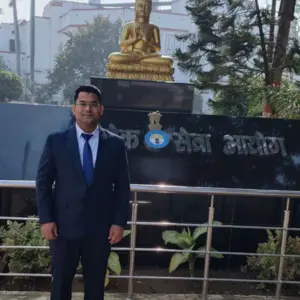
    Rajesh Kumar ChaudharyCleared 71st BPSC Mains 2025 (Interviewee)
    AnswerWriting has completely transformed my UPSC Mains preparation. I used to struggle with structuring my answers, but the AI feedback helped me refine my writing and improve with every attempt. It’s like having a personal mentor available 24/7!

    Navdeep YadavUPSC Aspirant
    The biggest hurdle for Hindi medium students is finding quality evaluation. This platform evaluates my Devanagari answers with the same precision as English. It catches my keyword mistakes and suggests better vocabulary-truly a level playing field now.
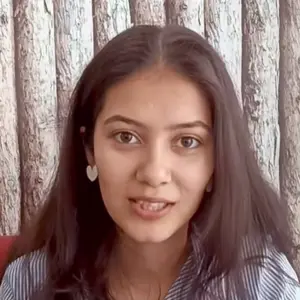
    Mitanshi SharmaUP PCS Hindi Medium Aspirant 2028 Mains
    I always found it difficult to get my answers evaluated on time, which slowed down my preparation. AnswerWriting changed that by providing instant, detailed feedback. Now, I can practice more efficiently and see real improvement in my writing.

    Varun SharmaUPSC Aspirant
    I asked for BPSC Evaluator and the team was so responsive. They are actually building features based on what we need. The AI doesn't just give marks; it tells me why I lost 0.5 marks in my introduction. That's the level of detail I need.

    Tanmay G.BPSC Aspirant 2026
    Initially, I was worried about my handwriting and using ruled landscape sheets, but the platform handles it perfectly. The Daily Answer Writing program has turned my preparation from erratic to disciplined. I loved it - the feedback is instant and incredibly user-friendly.

    Rohit Kumar GoyalUPSC Aspirant 2027

    FAQs

    Frequently Asked Questions

    Which plan includes the Anthropology Optional Test Series?

    Annual Pro. Optional test series are included only with the Annual plan.

    Is Super 50 a separate purchase?

    No. Super 50 is part of AnswerWriting Pro. Included with Annual Pro only.

    How are the tests evaluated?

    Write on paper, click a photo and upload it. AnswerWriting AI marks each answer to the real marks and word limit, with section-wise feedback and a model answer.

    How long does evaluation take?

    About 60 seconds for a single answer. A full 3 hour paper takes about 30 minutes, because every answer in it is marked in the same detail.

    When can I start?

    Join anytime and start practising from Test 1.

    Can I write in Hindi?

    Yes. You can write your answers in Hindi, and get your feedback in any of 23 languages.

    Do I get a model answer for every question?

    Yes. Every evaluated answer comes with a model answer, so you can see what full marks look like.

    Can I ask questions about my evaluation?

    Yes. Ask AnswerWriting AI why you lost marks on any answer and get a clear reply.

    Can I upload from my phone?

    Yes. Upload from the website or the AnswerWriting app.

    What happens after Mains 2027?

    The test series moves on to the next Mains cycle automatically. Your Pro access continues until your plan ends.

    Is the test plan updated?

    Yes. It follows the official syllabus and is reviewed every year.

    Is there a free sample?

    Yes. Test 1 of every Super 50 series is a free sample paper. You can view it without enrolling. It cannot be downloaded.

    Is there a refund?

    Pro comes with a 3-day money-back guarantee.

    Trusted by 100K+ users

    Write Confidently, Score Higher with AnswerWriting AI

    Refine your UPSC and State PSC Mains answers with clinical precision. AnswerWriting AI checks clarity, relevance and structure, helping you improve with every attempt.

    Enroll NowDownload App
    Avg. Score Boost+23% in 30 days
    Answers Evaluated58000+ this month
    Top Scorer Rate1 in 3 users

    AI Evaluation

    GS Paper II, Q.488%
    Introduction9.2/10
    Content & Analysis8.7/10
    Conclusion8.5/10
    Structure & Flow9/10
    Tip: Cite a recent SC judgement in the introduction to strengthen your opening.
    Enroll Now

    AnswerWriting

    AnswerWriting.com is revolutionizing exam preparation by making answer writing easy and effective. Enhance your skills with AI-powered feedback and achieve your dream scores!

    Quick Links

    • About Us
    • Contact Us
    • Pricing
    • Blogs
    • Anthroholic

    Tools

    • Answer Evaluator
    • Essay Evaluator
    • Optional Evaluator
    • Daily Answer Writing
    • Refer & Earn

    Contact

    info@answerwriting.comChat with us on WhatsApp
    QR code to download Answer Writing on Google Play
    Get the AppGet it on Google PlayDownload on the App Store

    Copyright © Anthroholic Technologies Private Limited. All rights reserved.

    • Privacy Policy|
    • Terms|
    • Cookie Policy|
    • Refund Policy|
    • FAQ