Anil Swarup: UPSC 1981 Batch, Strategy, and the Journey of a ‘Make It Happen’ Officer
What makes an officer stand out in a crowd of thousands? For Anil Swarup, it was the transition from the khaki of the Indian Police Service (IPS) to the highest echelons of the Indian Administrative Service (IAS). While many celebrate the rank, Swarup is celebrated for his “Nexus of Good” philosophy and his ability to fix broken systems, from the coal mines of India to the primary school classrooms of the nation.
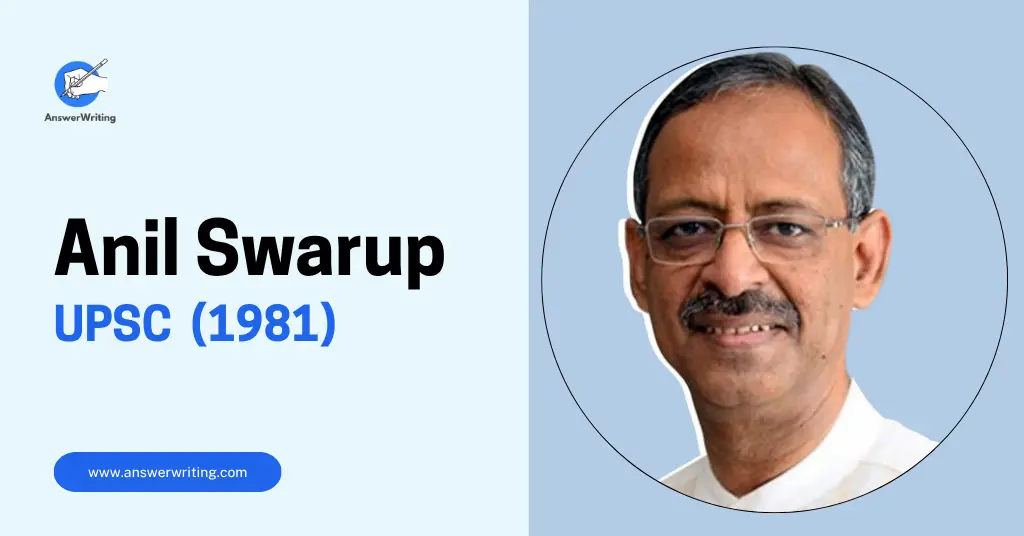
Who Is Anil Swarup?
Anil Swarup is a retired 1981-batch IAS officer of the Uttar Pradesh cadre. He is widely regarded as one of India’s most efficient and upright bureaucrats. During his tenure, he served in high-pressure roles, most notably as the Secretary of Coal and the Secretary of School Education and Literacy. He is also the author of the best-selling book, Not Just a Civil Servant, which has become a staple for UPSC aspirants seeking an honest look at life in the services.
| Feature | Details |
| Full Name | Anil Swarup |
| Batch | 1981 |
| Service Allotted | IAS (Formerly IPS in 1980) |
| Cadre | Uttar Pradesh |
| Current Status | Retired (Active Author and Public Speaker) |
| Notable Honors | Director’s Gold Medal (LBSNAA) |
Anil Swarup UPSC Marksheet and Score Details
Exact digital marksheets were not issued in 1981, but Swarup’s academic record was stellar. He was a gold medalist at Allahabad University, and his performance in the UPSC was dominant enough to secure him the IAS. Furthermore, his performance during training at the Lal Bahadur Shastri National Academy of Administration (LBSNAA) earned him the top honor for a trainee.
| Component | Achievement |
| UPSC Exam Rank | Top Tier (Selected for IAS) |
| Optional Subject | Political Science (Chancellor’s Gold Medalist) |
| LBSNAA Training | Director’s Gold Medal (Best All-round Officer Trainee) |
| Interview Score | Noted for high marks in articulation |
Educational Background and Early Life
Anil Swarup was born and raised in Allahabad, a city once known as the “Oxford of the East.” He attended Allahabad University, which at the time was a powerhouse for producing civil servants.
He was a brilliant student, earning the Chancellor’s Gold Medal for being the best all-around student. He completed his post-graduation in Political Science, a subject that would eventually become his bedrock for the UPSC. This academic environment taught him the importance of critical thinking and the ability to view governance as a tool for social change.
How Many Attempts Did Anil Swarup Take?
Anil Swarup cleared the UPSC in two consecutive attempts, each time securing a high-level service.
- First Attempt (1980): He cleared the exam and joined the Indian Police Service (IPS).
- Second Attempt (1981): Driven by a desire to work in policy implementation and general administration, he appeared again and successfully secured the Indian Administrative Service (IAS).
His journey highlights a crucial lesson for aspirants: the “mindset of persistence.” Shifting from the rigorous training of the IPS to re-studying for the IAS requires immense mental fortitude. He often advises candidates to treat the UPSC as a test of character rather than just a test of memory.
Anil Swarup Optional Subject: Mastering Political Science
Having excelled in Political Science during his University years, Swarup chose it as his optional subject. He did not look for “trending” or “scoring” subjects; instead, he relied on his core strength.
- Deep Understanding: He focused on the philosophical underpinnings of Political Science, which helped him in Ethics (though GS4 did not exist in its current form then, the logic remained the same).
- Analytical Writing: He used his optional to develop a nuanced understanding of the Indian Constitution and International Relations.
For modern aspirants, picking an optional can be a daunting task. Seeking guidance through an AI Mentor on AnswerWriting.com can help you analyze your academic strengths and syllabus overlap, much like Swarup did with his background in Political Science, ensuring you pick a subject you can master.
UPSC Preparation Strategy of Anil Swarup
Swarup’s strategy was built on “Functional Clarity.” He believed in understanding the essence of a topic rather than rote learning facts.
- Clarity of Thought: He practiced explaining complex topics in simple terms. He believed that if you cannot explain a concept to a layman, you haven’t understood it yourself.
- Focus on Logic: Whether it was History or Economics, he looked for the “cause and effect” relationship.
- Notes Over Books: While he read widely, his revision was based on his own concise notes.
Books and Resources Recommended by Anil Swarup
While the syllabus has evolved, the foundational reading habits Swarup advocates focus on building an administrative mindset.
| Subject | Resource | Author/Source |
| Polity/Constitution | Indian Constitution | D.D. Basu / P. Bakshi |
| Political Science | Western Political Thought | George Sabine |
| Ethics/Integrity | Not Just a Civil Servant | Anil Swarup |
| Governance | Ethical Dilemmas of a Civil Servant | Anil Swarup |
| Newspapers | Editorial Analysis | The Hindu / Indian Express |
Mains Answer Writing Approach
Anil Swarup’s writing style was marked by coherence and rationality. He often says that the examiner is not looking for a “scholar,” but for a “problem solver.”
- Articulation: He avoided jargon. His answers were direct and easy to follow.
- Balanced Perspective: He always presented both sides of an argument before concluding with a pragmatic solution.
- The “So What?” Factor: Every fact he mentioned was backed by an explanation of why it mattered in the current context.
To master this style, modern candidates use the Answer Evaluator on AnswerWriting.com. It provides feedback on the structure and flow of handwritten answers, helping aspirants identify if their arguments are as logical and balanced as those that helped Swarup top his batch.
Interview (Personality Test) Experience
Anil Swarup is a firm believer that the interview is a test of “articulation,” not just knowledge. He famously notes that “knowledge is only a prerequisite; the real test is how you convey that knowledge.”
In his own interview, he was composed and displayed a “can-do” attitude. He advises aspirants to avoid being “yes-men” to the board. Instead, one should hold a firm, well-reasoned opinion even if it differs from the board’s view, provided it is expressed politely.
Service and Cadre Allotted to Anil Swarup
Anil Swarup was allotted the Uttar Pradesh (UP) cadre. His career is widely considered one of the most impactful in modern Indian bureaucracy:
- Coal Secretary: He was appointed after the “Coalgate” scam. He successfully conducted transparent coal auctions that saved the exchequer billions of rupees.
- Education Secretary: He worked on improving the quality of education in government schools, focusing on outcomes rather than just infrastructure.
- Nexus of Good: Post-retirement, he started the “Nexus of Good” movement to identify and scale up positive stories of change in society.
Key Lessons Every UPSC Aspirant Can Take from Anil Swarup
- Focus on the Process: Success in UPSC is a byproduct of being a disciplined and curious person. Don’t just chase the rank; chase the knowledge.
- Ethics are Practical: Swarup proved that you can be honest and still get things done in a complex political environment.
- Articulation Matters: It doesn’t matter how much you know if you cannot express it clearly in your Mains paper or the Interview.
- Be a “Make It Happen” Person: The government needs officers who look for solutions, not just those who point out problems.
FAQs About Anil Swarup
What was Anil Swarup’s rank in the 1981 UPSC?
While he was among the top-tier candidates selected for the IAS, he is most famous for winning the Director’s Gold Medal as the best officer trainee of his batch at LBSNAA.
How many attempts did Anil Swarup take?
He took two attempts. In his first, he joined the IPS, and in his second, he secured the IAS.
What was his optional subject?
His optional subject was Political Science, in which he was also a University gold medalist.
Which books has Anil Swarup written?
His most famous books are Not Just a Civil Servant and Ethical Dilemmas of a Civil Servant.
What is the “Nexus of Good”?
It is a movement started by Anil Swarup to identify, celebrate, and scale up positive and successful work done by individuals and organizations in society.
Which cadre did he belong to?
He belonged to the Uttar Pradesh (UP) cadre.