Amitabh Kant: UPSC 1980 Batch, Strategy, and the Journey of India’s Chief Visionary
Most bureaucrats are known for managing the status quo, but Amitabh Kant became famous for disrupting it. From widening narrow roads in a small Kerala town to steering the G20 Sherpa negotiations on the global stage, his journey is a testament to the power of visionary governance. He didn’t just join the Indian Administrative Service (IAS); he used it to brand India for the world.
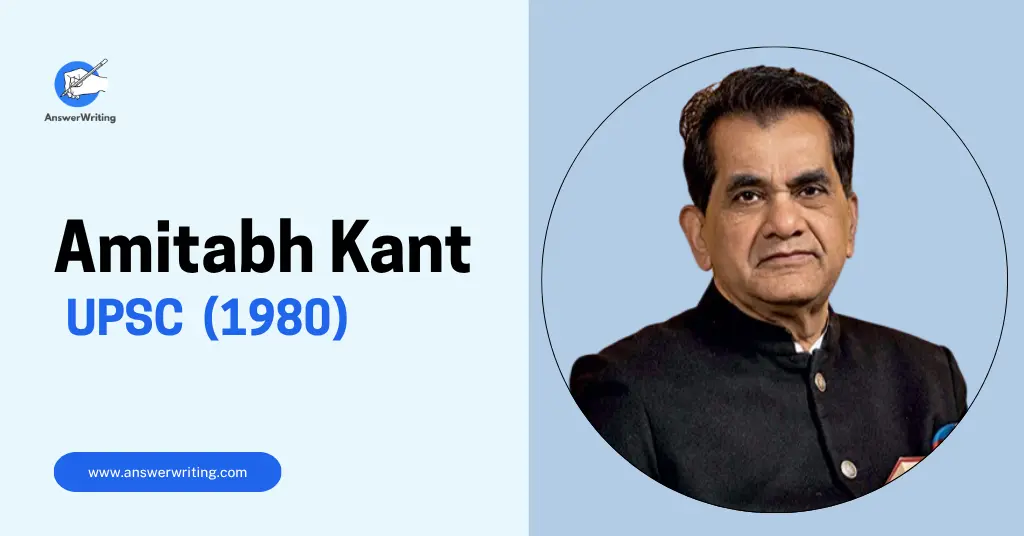
Who Is Amitabh Kant?
Amitabh Kant is a retired 1980-batch IAS officer of the Kerala cadre. He is a prolific policy shaper who served as the first CEO of NITI Aayog and later as India’s G20 Sherpa. He is the mastermind behind iconic campaigns like “Incredible India,” “God’s Own Country,” and “Make in India.” His career transitioned from grassroots administration in Kerala to the highest levels of global economic diplomacy.
| Feature | Details |
| Full Name | Amitabh Kant |
| Batch | 1980 |
| Service Allotted | Indian Administrative Service (IAS) |
| Cadre | Kerala |
| Education | St. Stephen’s College (Economics), JNU (International Relations) |
| Notable Roles | CEO NITI Aayog, G20 Sherpa, Secretary DIPP |
Amitabh Kant UPSC Marksheet and Score Details
While exact digital marks from 1980 are not publicly archived, Amitabh Kant is recognized as a top-merit ranker of his batch. His academic trajectory at St. Stephen’s and JNU suggests a high level of mastery in his chosen subjects. His performance in the personality test was particularly notable, as his articulation and global perspective became his professional trademarks.
| Component | Performance Level |
| Written Mains | High Merit (Economics and International Relations focus) |
| Personality Test | Exceptional (Noted for clarity and vision) |
| Batch Ranking | Top Tier (Selected for IAS) |
| Academic Background | University Topper / St. Stephen’s Scholar |
Educational Background and Early Life
Amitabh Kant was educated at Modern School, Delhi, before moving to St. Stephen’s College to study Economics. He later pursued an M.A. in International Relations from Jawaharlal Nehru University (JNU). This combination of elite institutions provided him with a unique blend of analytical economic thinking and a deep understanding of global geopolitics.
His education played a pivotal role in his UPSC success. The rigors of JNU taught him how to argue logically, while the Economics background at St. Stephen’s gave him the quantitative tools needed to understand complex policy frameworks. He often credits this broad intellectual foundation for his ability to think “outside the box” during his administrative career.
How Many Attempts Did Amitabh Kant Take?
Amitabh Kant cleared the UPSC Civil Services Examination in his very first attempt. He belonged to a generation of students who viewed the civil services as the ultimate platform for nation-building.
His first-attempt success was not a matter of luck but of extreme academic focus. He did not treat the UPSC as an isolated test but as an extension of his post-graduate studies. For modern aspirants, this “one-shot” mindset is crucial. Achieving this requires more than just reading; it requires strategic planning. Platforms like AnswerWriting.com offer an AI Mentor that provides personalized guidance, helping candidates align their current academic strengths with the UPSC syllabus, much like Kant did with his background in Economics and IR.
Amitabh Kant Optional Subject: Economics and International Relations
Amitabh Kant chose Economics and International Relations as his optional subjects. Given his academic background, these were natural choices that allowed him to write answers with a level of authority that examiners appreciate.
- Economics: His degree from St. Stephen’s allowed him to tackle technical questions with ease. He focused on the application of economic theories to Indian developmental challenges.
- International Relations: His time at JNU was instrumental here. He moved beyond textbooks to understand the shifting dynamics of the Cold War era (the context of 1980), which gave his answers a contemporary edge.
UPSC Preparation Strategy of Amitabh Kant
Kant’s strategy was characterized by “Intellectual Curiosity.” He was never satisfied with surface-level knowledge.
- Macro-Analysis: He focused on the “Big Picture.” Instead of memorizing isolated schemes, he studied the socio-economic philosophy behind government interventions.
- Breadth of Reading: He read extensively beyond the syllabus, including international journals and policy papers. This gave his Mains answers a sophisticated “policy-paper” feel.
- Cross-Linking: He excelled at linking Economic theory with International Relations and Indian Polity. This interdisciplinary approach is what the UPSC looks for in its top rankers.
Books and Resources Recommended by Amitabh Kant
While the specific editions have updated, the core resources Amitabh Kant advocates for building a vision for India are:
| Subject | Resource | Context |
| Indian Economy | Indian Economy | Uma Kapila / Economic Survey |
| International Relations | Global Geopolitics | Standard JNU Curriculum / Journals |
| Ethics & Governance | Made in India | Amitabh Kant (Post-career insights) |
| Policy Formulation | Incredible India 2.0 | Amitabh Kant |
| Daily News | Editorial Analysis | The Hindu / Financial Times |
Mains Answer Writing Approach
Amitabh Kant viewed answer writing as an exercise in “Branding a Solution.” He believed that an officer must be able to sell a good idea to the government and the public.
- Structuring: He used a professional structure: Context, Analysis, Solution, and Vision.
- Global Benchmarking: Even in his early days, he compared Indian problems with global success stories.
- Clarity over Complexity: He avoided dense jargon in favor of clear, impactful language.
Developing this professional tone takes practice. Many serious aspirants use tools like the Answer Evaluator on AnswerWriting.com to get immediate feedback on whether their structure is academic or professional. This type of evaluation helps in moving from being a “student” who answers questions to an “aspirant” who proposes policy solutions.
Interview (Personality Test) Experience
In the interview, Amitabh Kant’s poise and global outlook stood out. He was questioned on topics ranging from Kerala’s development model to India’s position in global trade.
His advice to candidates is to “be a visionary.” The board is not looking for someone who can just follow orders; they are looking for someone who can lead a department and represent India on international platforms. His ability to articulate a clear vision for the sectors he discussed made his AIR a certainty.
Service and Cadre Allotted to Amitabh Kant
Amitabh Kant was allotted the Kerala cadre. His journey in Kerala was transformative:
- Thalassery: As Sub-Collector, he famously widened roads by convincing locals of the long-term benefits of development.
- Tourism: He created the “God’s Own Country” brand, turning Kerala into a global tourism hub.
- National Impact: He later moved to the Central Government, heading the Delhi-Mumbai Industrial Corridor (DMIC) and then becoming the CEO of NITI Aayog.
- G20 Sherpa: In 2023, he played a crucial role in negotiating the New Delhi Leaders’ Declaration, showcasing his skills as a master diplomat.
Key Lessons Every UPSC Aspirant Can Take from Amitabh Kant
- Think Like a Marketer: An IAS officer must be able to “sell” development to the people. Communication and branding are as important as policy.
- Stay Intellectually Curious: Don’t limit yourself to the syllabus. Read about technology, global shifts, and innovation.
- Persistence in Vision: Whether it was widening a road in Thalassery or “Make in India,” Kant showed that a clear vision followed by persistent action leads to results.
- Embrace Technology: Throughout his career at NITI Aayog, he pushed for digital transformation, a lesson for every future administrator.
FAQs About Amitabh Kant
What was Amitabh Kant’s UPSC rank?
He was a top-tier ranker in the 1980 batch. While the specific numerical AIR is not in the public digital archive, he secured the IAS in his first attempt.
Which optional subjects did he choose?
He chose Economics and International Relations, subjects he had mastered at St. Stephen’s and JNU.
How many attempts did he take?
Amitabh Kant cleared the UPSC in his very first attempt.
What is his role in the G20?
He served as India’s G20 Sherpa during its presidency in 2023, where he was responsible for negotiating the consensus among world leaders.
Which books has he written?
He has authored several books, including Made in India, Incredible India 2.0, and Branding India: An Incredible Story.
What was his cadre?
He belonged to the Kerala cadre.